 HDKP 6.6
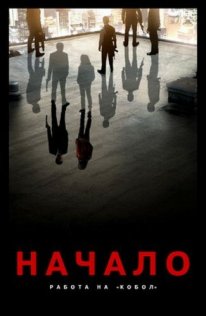
Inception: Motion Comics (2010)
Start: Work on "Cobol", 2010. A short thriller about Dom Cobb, who extracts secrets from dreams for "Cobol Engineering".
0
0
644
HDKP 6.6
Start: Work on "Cobol", 2010. A short thriller about Dom Cobb, who extracts secrets from dreams for "Cobol Engineering".
 HDKP 7.3
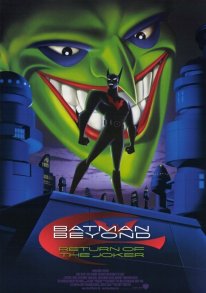
"Batman Beyond: Return of the Joker" (2000) is a cult animated film where Terry McGinnis will confront the resurrected Joker and uncover Bruce Wayne's dark secret.
 HDIMDb 8.4KP 8.2
Terrifying creatures, wicked surprises and dark comedy converge in this NSFW anthology of animated stories presented by Tim Miller and David Fincher.
Animated thrillers are a form of animation built on anxiety, uncertainty, and psychological pressure. What matters most here is not action, but anticipation: the sense of a threat that may never fully reveal itself. The animated medium allows this state to be pushed to its limits, working through visual metaphor, rhythm, and distorted perception of reality.
On Minatrix.TV, animated thrillers are treated as a mature psychological genre in which form and atmosphere play a decisive role.
Animation gives the thriller tools that live-action cinema does not possess:
That is why animated thrillers are often perceived as psychologically more disturbing than live-action films.
The animated thriller exists in several established forms:
On Minatrix.TV, these subgenres function as navigation categories, helping viewers search for films by mood and type of tension.
Although the genres are often confused, there is a fundamental difference:
Because of this, animated thrillers are often perceived as an intellectual and auteur-driven genre.
Animated thrillers explore themes close to adult viewers:
loss of control, loneliness, manipulation, systemic pressure, blurred boundaries between reality and the self.
Animation allows these ideas to be expressed indirectly, through form and sensation, turning the viewing experience into not entertainment, but a psychological encounter.
Minatrix.TV treats animated thrillers as a genre of tension and form, rather than plot twists:
Our goal is to help viewers find an animated thriller that works on a subconscious level, not merely through surprise effects.
A thriller is built on anticipation and tension, whereas horror relies on direct fear and shocking imagery. In a thriller, what frightens you is not what happens, but what might happen.
No. This is a mature genre aimed at psychological perception, anxiety-driven themes, and complex emotions. Most animated thrillers are not intended for a child audience.
Suspense is a state of tense anticipation. In animation, it is created through rhythm, silence, recurring imagery, sound, and visual instability rather than abrupt scenes.
Because animation is not bound by the laws of physical reality. It can distort proportions, movement, and logic, creating anxiety at a subconscious level.
Animation where fear is born not from monsters, but from silence, anticipation, and the feeling that something is wrong.
Animated thrillers are a territory where animation stops being a form of entertainment and becomes a tool of psychological influence. There is no safe distance between the viewer and what is happening: anxiety arises not from events, but from sensations — from broken logic, an unnaturally long pause, or a character’s unsettling gaze.
In this genre, animation reaches its ultimate power: it does not show fear directly, but implants it into perception, forcing the viewer to doubt what they see, hear, and even feel. That is why the best animated thrillers stay with us for a long time — they do not frighten instantly, but slowly take root in memory, returning as questions, images, and uneasy associations.