 HDIMDb 5.6KP 5.6
Killing Faith (2025)
Sins of the West (2025) – a mystical Western by Ned Crowley. A girl brings death: a mother and doctor seek healing.
0
0
525
HDIMDb 5.6KP 5.6
Sins of the West (2025) – a mystical Western by Ned Crowley. A girl brings death: a mother and doctor seek healing.
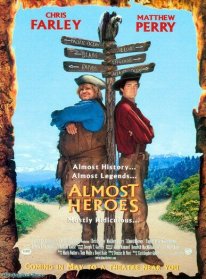 HDKP 6.3
Almost Heroes (1997) — a comedy about a hapless expedition to the Wild West, preceding Lewis and Clark.
 HD
HD
"Blood on the Border" (2025) is a tense drama directed by Travis Mills. Mercenary Merrick will face a difficult moral choice. See what a person is capable of for the sake of survival and compassion.
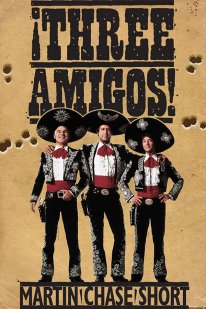 HDKP 6.7
"Three Amigos!" (1986) is a cult comedy by John Landis starring Steve Martin, Chevy Chase, and Martin Short.
 HDIMDb 7.5KP 8.2
"Back to the Future Part III" (1990) is a Wild West comedy where Marty saves Doc and finds love! Discover how the iconic saga concluded.
 HDKP 7.1
Jack Bull (1999) is a drama about conflict in the Wild West. Watch the 1999 film about revenge, justice, and the struggle for survival.
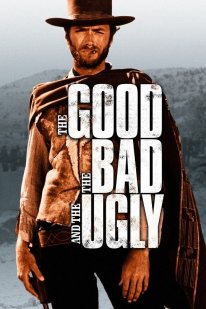 HDIMDb 8.8KP 8.5
While the Civil War rages on between the Union and the Confederacy, three men – a quiet loner, a ruthless hitman, and a Mexican bandit – comb the American Southwest in search of a strongbox containing $200,000 in stolen gold.
 HDIMDb 8.5KP 8.2
With the help of a German bounty hunter, a freed slave sets out to rescue his wife from a brutal Mississippi plantation owner.
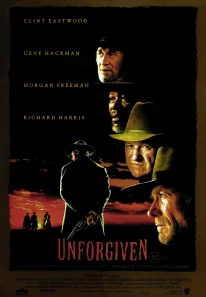 HDIMDb 8.2KP 7.8
A dark revisionist Western exploring guilt, violence, and the collapse of heroic myth in Clint Eastwood’s Oscar-winning film.
Westerns are among the most recognizable and visually expressive genres in cinema, shaping the image of the hero, the language of the frame, and ideas of justice. This is cinema about people living on the frontier between civilization and chaos, where the law has yet to take hold and every choice must be made personally — under an open sky on unforgiving land.
The western is far from monolithic. Over decades, the genre has evolved and given rise to several defining movements:
Classic Westerns (1930s–1950s)
Hollywood classics built around a clear moral code. The hero stands for order, law confronts lawlessness, conflicts are direct, and landscapes are wide open. These films established the genre’s canon and the visual language of the Wild West.
Spaghetti Westerns (1960s–1970s)
An Italian reimagining of the genre — harsher, more cynical, and visually sharper. Absolute heroes disappear, duels become ritualized, and the focus shifts from morality to survival, style, and tension.
Revisionist Westerns
Films that dismantle the romantic myth of the West. Violence is portrayed as trauma, and heroes are shown as deeply flawed individuals burdened by their past and morally ambiguous choices.
Neo-Westerns and Contemporary Westerns
Stories relocated to the 20th and 21st centuries, where the spirit of the genre persists without cowboys and revolvers. These films explore borders of law, isolation, and personal responsibility in the modern world.
The western is a genre that can be “read” visually.
Hollywood of the 1950s favored sweeping panoramas, bright imagery, and heroic composition.
Italian westerns of the 1960s introduced dust, sweat, extreme close-ups, sharp editing, and long, tension-filled pauses.
Modern westerns rely on scorched landscapes, muted color palettes, slow pacing, and a strong focus on the characters’ inner states.
The genre’s evolution is evident not only in narrative, but in cinematography, sound design, pacing, and overall visual philosophy.
This page brings together westerns from different eras and subgenres, allowing you not just to choose a film, but to consciously compare and explore the genre.
The catalog includes:
This approach reveals how the western has transformed — from a classical myth into modern psychological cinema.
The western endures because its themes are universal: power and responsibility, solitude, the boundary of law, and personal choice.
It is a genre that evolves alongside society while preserving its distinct visual and philosophical identity.