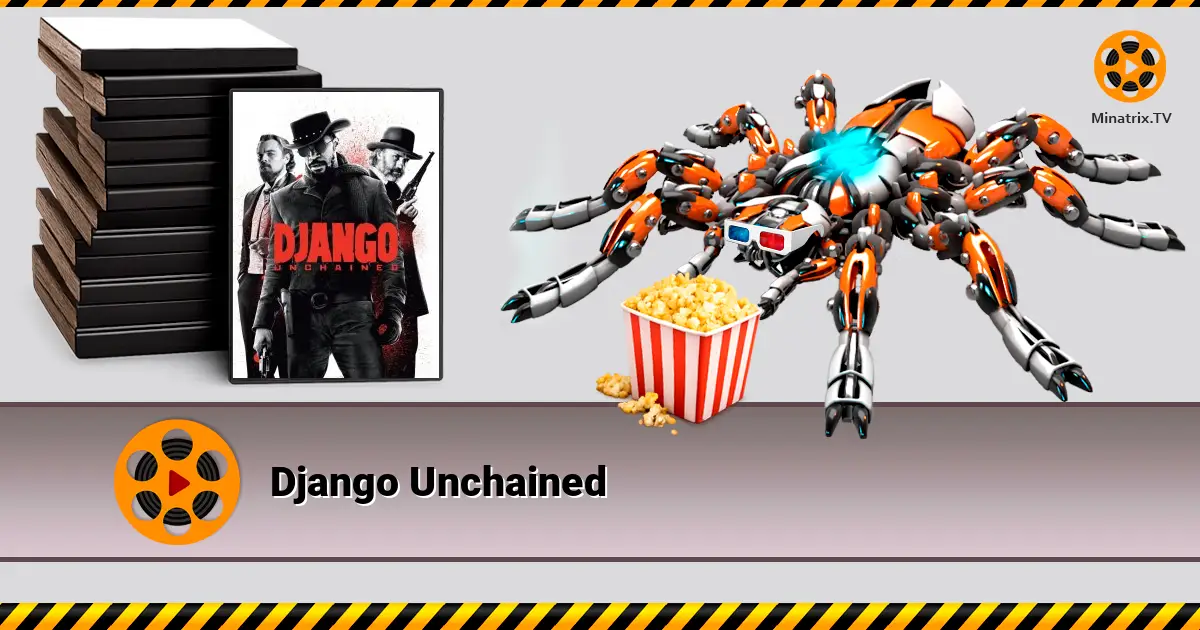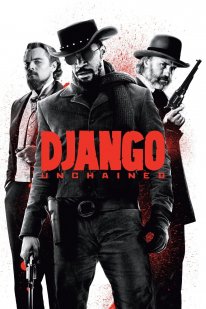
Movie Django Unchained (2012)
With the help of a German bounty hunter, a freed slave sets out to rescue his wife from a brutal Mississippi plantation owner.
About the movie Django Unchained
“Django Unchained” (2012) is Quentin Tarantino’s bold revisionist western in which the classic genre is transformed into a radical story of liberation, revenge, and the rethinking of the American myth. The film merges the aesthetics of spaghetti westerns, exploitation cinema, and historical drama, creating one of the director’s most provocative and widely discussed works.
Concept and story
The story unfolds in the southern United States two years before the Civil War. Former slave Django gains his freedom thanks to the eccentric German bounty hunter Dr. King Schultz. Together they form an unusual alliance: Schultz needs Django’s help, while Django needs a chance to rescue his wife Broomhilda, who has been sold into slavery.
Their journey leads them to the luxurious and brutal plantation “Candyland,” owned by the charismatic and sadistic slaveholder Calvin Candie. Here, the story fully turns into a parable about power, violence, and retribution, where compromise is impossible.
Critical perspective
“Django Unchained” is a film that deliberately balances between entertainment and discomfort. Tarantino employs hyperbole, dark humor, and stylization to strip slavery of any romantic aura, portraying it as a system of absolute humiliation and cruelty.
The film consciously rejects historical restraint in favor of emotional catharsis. Django is neither a victim nor a passive observer, but an active subject of history, making the film a rare example of a western inverted through the perspective of the oppressed.
Themes and subtext
-
slavery as institutional violence;
-
freedom achieved through action, not mercy;
-
power and dehumanization;
-
revenge as a means of restoring dignity;
-
the destruction of the myth of the “noble South.”
Visual style and direction
The film is saturated with vivid colors, sharp contrasts, and theatrical brutality. Blood here is not realism, but a genre language borrowed from spaghetti westerns and 1970s exploitation cinema.
The camera emphasizes Django’s transformation — from a chained slave to a confident, almost mythological figure.
Music and soundtrack
The soundtrack is eclectic: from classic themes by Ennio Morricone to contemporary hip-hop. This contrast underlines the story’s timelessness — the film exists simultaneously in the past and the present, addressing themes that remain relevant.
Cultural significance
“Django Unchained” became one of Tarantino’s most debated films and a key point in the discussion of how popular cinema can address traumatic history without academic distance. The film sparked controversy, but it is precisely this radicalism that ensured its long cultural life.
Editorial conclusion
“Django Unchained” is a western about freedom, told through the language of rage and style.
The film does not aim to be a historical textbook, but achieves something else — emotional truth, where humiliation is answered and silence is replaced by a gunshot. It is provocative, spectacular, and unapologetically auteur cinema that cannot be watched neutrally.
Player / Trailer
Leave a comment