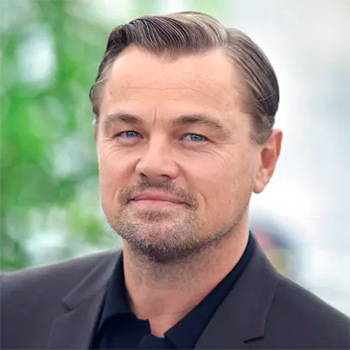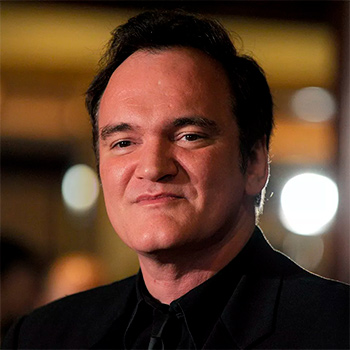
Quentin Jerome Tarantino is an American director, screenwriter, and producer—one of the defining auteurs of the late 20th and early 21st centuries. His cinema has become synonymous with a postmodern approach: fragmented storytelling, hyper-self-aware genre quotation, musical collage, and violence transformed not into shock value but into an expressive artistic language. Tarantino proved that cinephilia can be more than a hobby—it can be a fully fledged method for creating a new cinematic language.
Origins and Early Years
Quentin Tarantino was born on March 27, 1963, in Knoxville, Tennessee. Shortly after his birth, his mother moved with him to Los Angeles—a city that would later become not merely a backdrop, but a mythological center of his work.
Tarantino has no formal film education. His true school was the video rental store Video Archives in Manhattan Beach, where he worked during the 1980s. There, he systematically absorbed cinema of every kind:
- Italian spaghetti westerns,
- Hong Kong action films,
- Shaw Brothers productions,
- the French New Wave,
- American exploitation cinema.
It was during this period that his core principle took shape: cinema is learned not through theory, but through viewing, memory, and immersion.
The Screenwriter as a Starting Point
Before directing, Tarantino first made his mark as a screenwriter. His early work stood out in Hollywood for its unconventional approach: dialogue did not function as a mere vehicle for plot, but as autonomous dramaturgy.
Key screenplays:
- “True Romance” (1993)
- “Natural Born Killers” (1994) — though heavily reworked, the original authorial energy remained unmistakable
Even here, his signature traits were already evident: the criminal world as a philosophical environment, and characters who discuss pop culture as if it were a matter of life and death.
“Reservoir Dogs”: The Birth of an Authorial Voice
The debut film “Reservoir Dogs” (1992) instantly made Tarantino a figure to watch. Confined space, non-linear editing, sudden bursts of violence, and tension-charged dialogue demonstrated one thing clearly:
Tarantino does not imitate genre—he dissects its mechanics.
The film became the starting point for a new wave of independent American cinema.
“Pulp Fiction”: A Cultural Turning Point
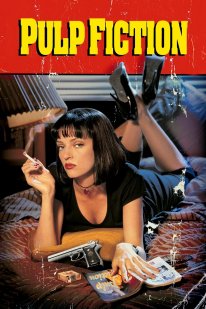
“Pulp Fiction” (1994) was not merely a success—it was a cultural rupture. The film shattered linear narrative, turning structure itself into a game with the viewer. The lowbrow pulp genre was elevated to the level of philosophical statement.
The result:
- the Palme d’Or at the Cannes Film Festival
- global recognition
- the establishment of Tarantino as a central figure of postmodern cinema
Genre as an Archive of Memory
Tarantino’s subsequent films are not stylizations, but reincarnations of genre:
- “Jackie Brown” (1997) — a mature crime drama and a homage to blaxploitation
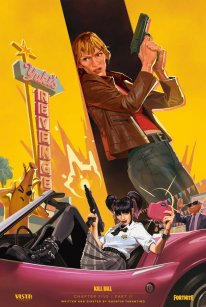
- “Kill Bill: Vol. 1” (2003) / “Vol. 2” (2004) — a synthesis of samurai cinema, kung fu, anime, and the spaghetti western
- “Death Proof” (2007) — an experiment in grindhouse aesthetics
Each project functions as a dialogue with film history, not as a catalogue of references.
Alternate History as Method
From the late 2000s onward, Tarantino turned to history—but strictly on his own terms:
- “Inglourious Basterds” (2009)
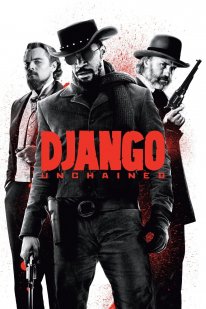
- “Django Unchained” (2012)
- “The Hateful Eight” (2015)
- “Once Upon a Time in Hollywood” (2019)
In these films, history becomes a space for authorial justice. Tarantino deliberately rewrites the past, asserting that cinema can do what reality cannot.
Working with Actors
Tarantino is renowned for his ability to:
- bring forgotten actors back into the spotlight,
- reveal unexpected facets of established stars,
- create roles that become career-defining.
He played a key role in the career revivals of:
- John Travolta
- Pam Grier
- Kurt Russell
- Christoph Waltz
He also revealed new dimensions of Leonardo DiCaprio—comic, grotesque, and tragic at once.
Dialogue and Music
Tarantino’s dialogue is about rhythm and pause, not mere information. He writes it like musical phrasing, where banality and repetition become sources of tension.
He approaches music as a curator:
- deliberately avoiding original scores,
- assembling soundtracks from existing tracks,
- reframing their meaning through cinematic context.
In Tarantino’s films, music is part of the dramaturgy, not background.
Literature and the Late Period
In recent years, Tarantino has increasingly turned to writing. His novelization of “Once Upon a Time in Hollywood” demonstrated that he views literature as an equal continuation of cinematic language. The director has repeatedly stated that he does not aspire to make films indefinitely, preferring a finite and complete authorial statement.
Legacy
Quentin Tarantino is a rare example of a filmmaker who:
- became a classic within his own lifetime,
- retained complete artistic independence,
- transformed love for other people’s films into a language of his own.
Editorial Conclusion
Quentin Tarantino is a director who proved that cinema can be popular, intellectual, and radically personal at the same time. His films are not merely stories, but the memory of cinema retold—with irony, brutality, and an impeccable sense of form.
 HDIMDb 8.8KP 8.7