 HDIMDb 8.2KP 8
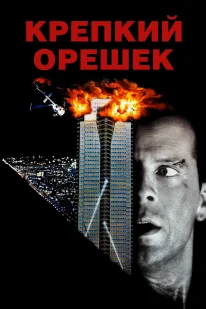
Die Hard (1988)
A genre-defining action classic where a lone cop battles terrorists inside a skyscraper, redefining the modern action movie.
0
0
612
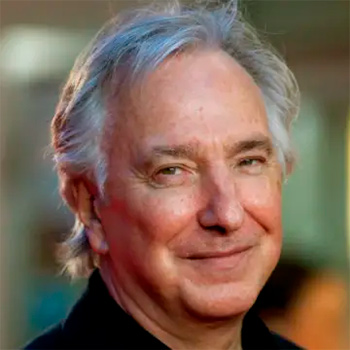
Alan Sidney Patrick Rickman — a British actor, director, and one of the most hypnotic voices in the history of world cinema. His phenomenon lay in a rare combination of absolute theatrical discipline and an ability to convey immense inner tension through the smallest movement, a pause, or a glance. He became the benchmark for the “intelligent antagonist,” yet he was equally a master of profound, tragic humanity—an artist whose characters were always more than their function in the plot.
Alan Rickman was born on February 21, 1946, in Hammersmith, a working-class district of London. His father died when Alan was only eight, and that early loss shaped key traits that would later become part of his craft: restraint, responsibility, and an inner quiet that he ultimately turned into a stage instrument.
Rickman did not come to the theatre immediately. He trained as a graphic designer at the Royal College of Art and even ran his own design studio, Graphiti, in Soho. That visual background stayed with him for life: he approached roles as compositions in which rhythm, balance, and the empty space between elements matter.
A crucial fact: Rickman was a “late” actor. He entered RADA (the Royal Academy of Dramatic Art) at 26—an age when many are already taking stock. That lived experience became the source of his “adult” credibility: he never played impulse, only deliberate choice.
For Rickman, theatre was not a career stage but a mode of existence. Work with the Royal Shakespeare Company taught him to treat text like a musical score: every pause, stress, and silence carried meaning.
His breakthrough came with the role of Vicomte de Valmont in Les Liaisons Dangereuses (Dangerous Liaisons). His character was not a seducer but a strategist—cold, ironic, and lethally precise. American producers saw that work, and it was the role that brought Rickman to film.
His film debut came late—at 42—but it became legendary overnight. In Die Hard (1988) Rickman played Hans Gruber, rewriting the idea of the action-movie antagonist.
His villain was:
A lesser-known detail: Gruber’s falling scene was shot without multiple takes. Rickman was released earlier than he expected, so the look of terror on screen is genuine, not performed. The moment became a symbol of a new era of villains—smart, dangerous, and magnetic.
The image of Severus Snape in the Harry Potter saga became a cultural code of the 21st century. The key point: Rickman was the only actor to whom J. K. Rowling revealed the character’s fate in advance—including the word “Always.”
Knowing the ending years before the audience, he constructed the performance through micro-hints, double meanings, and inner contradictions. His Snape is neither villain nor hero but a tragic figure living between guilt, love, and duty.
Rickman approached the franchise without illusions, yet with respect:
he considered Harry Potter a rare example of mainstream cinema where a genuinely complex character is allowed to exist.
Rickman refused to let the industry confine him. His filmography is a deliberate dismantling of expectations:
He disliked the word “villain,” insisting that any character is a person with their own logic—not a plot function.
Rickman’s voice was often called “perfect.” Its timbre was partly physiological, but he turned it into an artistic method.
Professionals speak of the “Rickman pause”—his ability to hold silence longer than the usual screen rhythm allows. He made the viewer not wait for the next line, but listen to the quiet.
As a director, Rickman made The Winter Guest and A Little Chaos—intimate, humane films built around actors rather than effects.
An important part of his legacy is his personal diaries, published after his death. They revealed Rickman as:
He often turned down roles he felt were shallow, choosing to work less—but more deeply.
Alan Rickman spent more than 50 years with one woman—Rima Horton—without publicity or performative romance. He avoided the social circuit and disliked grandstanding.
He died on January 14, 2016. His final work was voicing Absolem in Alice Through the Looking Glass—his voice becoming, quite literally, a farewell to the audience.
Alan Rickman proved that:
He did not merely play roles—he built meanings.
| Year | Film | Character | Type / significance |
|---|---|---|---|
| 1988 | Die Hard | Hans Gruber | A new kind of intellectual antagonist: coldness, irony, strategic thinking |
| 1990 | Truly, Madly, Deeply | Jamie | A romantic lead without clichés: vulnerability, quiet tenderness, existential melancholy |
| 1991 | Robin Hood: Prince of Thieves | The Sheriff of Nottingham | Theatrically hyperbolic villain; an ironic re-reading of a classic |
| 1995 | Sense and Sensibility | Colonel Brandon | Nobility without performative heroism; emotional restraint |
| 1999 | Dogma | Metatron | Voice as meaning: ironic metaphysics; authority without aggression |
| 1999 | Galaxy Quest | Alexander Dane / Dr. Lazarus | Actorly self-reflection: irony about the profession and cult roles |
| 2001 | Harry Potter and the Philosopher’s Stone | Severus Snape | Enigmatic antihero: hidden loyalty, double morality |
| 2002–2011 | The “Harry Potter” film series | Severus Snape | A long-form dramatic arc: tragedy, sacrifice, inner conflict |
| 2003 | Love Actually | Harry | A morally ambiguous “ordinary man”: infidelity without demonization |
| 2006 | Perfume: The Story of a Murderer | Antoine Richis | A rational observer; a figure of order in an irrational world |
| 2007 | Sweeney Todd: The Demon Barber of Fleet Street | Judge Turpin | Perverted power, repressed desire, social hypocrisy |
| 2010 | Alice in Wonderland | Absolem (voice) | A meditative guide; philosophical presence through voice |
| 2013 | The Butler | Ronald Reagan | A restrained portrait of power, without caricature |
| 2015 | A Little Chaos | King Louis XIV | An exhausted ruler: a man between art and responsibility |
| 2016 | Alice Through the Looking Glass | Absolem (final role, voice) | A farewell image: calm, acceptance, transformation |
Alan Rickman almost never played:
His domain was people with an inner logic, where:
That is why his filmography reads not as a list of parts, but as a catalogue of human states.
Alan Rickman was an architect of inner dramaturgy—an artist who taught cinema to respect the pause and the viewer. His voice endures not because it was loud, but because it was honest.
HDIMDb 8.2KP 8
A genre-defining action classic where a lone cop battles terrorists inside a skyscraper, redefining the modern action movie.