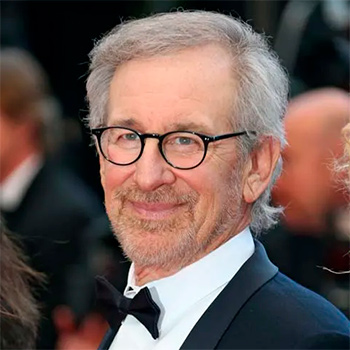
Steven Spielberg is an American director, producer, and screenwriter—one of the key architects of modern Hollywood. His career is a rare synthesis of mass entertainment, auteur expression, and industrial influence, where commercial success does not contradict humanistic depth.
Spielberg by the Numbers (Key Facts)
| Metric | Data |
| Date of birth |
December 18, 1946 |
| First film |
Firelight (1964, amateur) |
| Television debut |
Duel (1971) |
| Academy Awards |
3 (200+ awards and nominations overall) |
| Highest-grossing film |
Jurassic Park (1993) |
| Total worldwide box office |
Over $10 billion |
| Studios |
Amblin Entertainment, DreamWorks Pictures |
Origins and Early Years
Steven Allan Spielberg was born in Cincinnati, Ohio, into a Jewish family. His father was an electrical engineer, his mother a pianist. A childhood marked by frequent moves and episodes of antisemitism shaped him as a keen observer and storyteller, acutely sensitive to themes of otherness.
As a teenager, he began making short films on an 8mm camera; at 16, he screened Firelight at a local theater. Despite multiple rejections from USC’s film school, Spielberg continued as a self-taught filmmaker—a decision that became part of his myth.
Television Beginnings and Early Breakthrough
The TV film Duel (1971) announced a distinct authorial voice: tension built without dialogue and an everyman protagonist facing an impersonal threat. The film brought international recognition and opened the door to feature cinema.
The Invention of the Blockbuster
Jaws (1975) was more than a hit—it created the model of the summer blockbuster. It was followed by:
- Close Encounters of the Third Kind (1977) — science fiction as hope;
- Indiana Jones (1981–1989) — a reinvention of the adventure film;
- E.T. the Extra-Terrestrial (1982) — a family film with rare emotional sincerity.
Directorial Signature: Themes and Techniques
Signature techniques
- The Spielberg Face: a sustained close-up of awe—the moment a human encounters the miraculous.
- Backlighting and “divine rays”: light breaking through smoke, windows, or foliage as a visual metaphor for hope.
- Eye-level camera: the world often seen from a child’s or “ordinary person’s” perspective.
- Musical synthesis: a tight bond between image and score (often with John Williams).
Recurring themes
- family and loss;
- the collision of the ordinary with the extraordinary;
- the ethics of responsibility;
- humanism as the engine of narrative.
Turn Toward Major Drama
In the 1990s, Spielberg expanded his range:
- Schindler’s List (1993) — a watershed moment, an Oscar win, and definitive critical recognition;
- Jurassic Park (1993) — a technological leap in CGI;
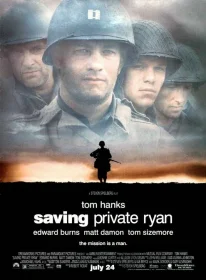
- Saving Private Ryan (1998) — a new standard of war realism.
Criticism and Recognition
For years, Spielberg was criticized for excessive sentimentality and commercialism. Those arguments lost force after Schindler’s List, which proved his dramatic maturity. Since then, the debate has shifted from “entertainer” to moral chronicler of an era.
Producer and Industry Strategist
As co-founder of Amblin Entertainment and a key figure at DreamWorks, Spielberg launched dozens of projects and careers, from family films to animation and historical drama. His producer’s credo is simple: story before technology.
Key Periods and Films
| Period | Genre | Key Works |
| 1970s |
Thriller / Sci-Fi |
Duel, Jaws, Close Encounters |
| 1980s |
Adventure |
Indiana Jones, E.T. |
| 1990s |
Drama / Blockbuster |
Schindler’s List, Jurassic Park, Saving Private Ryan |
| 2000s |
Futurism |
Minority Report, War of the Worlds |
| 2020s |
Retrospective |
West Side Story, The Fabelmans |
Relevance
In the mid-2020s, Spielberg remains an active producer and curator of major projects. He is involved in developing historical and television formats, including projects connected to Stanley Kubrick’s legacy, and supports new auteur voices—confirming his status as a living institution of the industry.
Significance and Legacy
Steven Spielberg:
- shaped the economy and aesthetics of modern Hollywood;
- proved that the mainstream can be ethical and humane;
- turned audience wonder into a form of empathy.
Editorial conclusion: Spielberg is a director for whom wonder always begins with the human being. His films endure because they speak not to trends, but to fundamental feelings—fear, hope, and compassion.
 HDIMDb 8.6KP 8.2