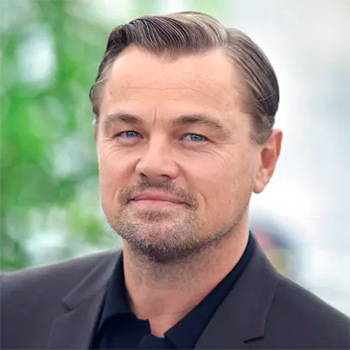
Leonardo Wilhelm DiCaprio is an American actor and producer, one of the central figures of world cinema over the past three decades. His career is a rare example of a conscious, strategically built evolution, in which teenage fame became not a trap but a starting point for a complex, auteur-driven, and principled path. DiCaprio belongs to the group of artists who helped shape a new standard of acting choices in Hollywood, where reputation and artistic value matter more than short-term success.
Origins and personal formation
Leonardo DiCaprio was born on November 11, 1974, in Los Angeles. His father, George DiCaprio, was an artist and publisher of underground comics; his mother, Irmelin Indenbirken, worked as a legal secretary. His parents divorced early, and Leonardo was raised primarily by his mother, in an environment far removed from glossy Hollywood and oriented toward counterculture, art, and independent thinking.
A symbolic detail: he was named “Leonardo” after his mother felt his first kick while standing in front of a painting by Leonardo da Vinci in Florence. This almost mythological episode later became part of the actor’s public narrative.
Early start and the discipline of the craft
DiCaprio’s career began in childhood, with commercials and television projects. In the early 1990s, he appeared frequently in TV series, displaying a level of emotional focus and observation rare for an adolescent actor.
The turning point came with his role in What’s Eating Gilbert Grape (1993), in which he portrayed a teenager with intellectual disabilities. At just 19, DiCaprio received an Academy Award nomination, and this performance firmly established him as an actor of serious dramatic scale, rather than merely a promising young talent.
“Titanic” and the conscious rejection of the easy path
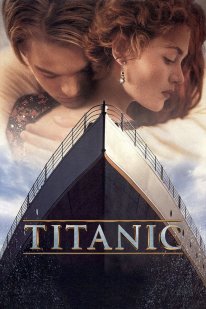
The film “Titanic” (1997) turned DiCaprio into a global star and an object of mass adoration. However, instead of cementing himself as a romantic hero, he made a move that was rare at the time: he refused to replicate that success.
After Titanic, he deliberately chose:
This period is often seen as a slowdown in his career, but it was precisely then that the foundation of his future status as a strategic actor, rather than a star of the moment, was laid.
An alliance with auteur directors
A key stage was his collaboration with Martin Scorsese. Their joint work shaped DiCaprio’s central screen archetype:
a man at the peak of power, talent, or wealth — and the inevitable inner decay.
Films from this period cemented his reputation as an actor capable of sustaining multi-layered dramatic structures, where the character is simultaneously magnetic and destructive.
Tarantino: comedy, grotesque, and self-irony
A qualitatively new dimension of DiCaprio’s range emerged through his collaboration with Quentin Tarantino.
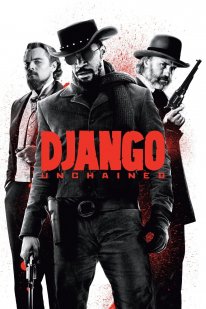
In Django Unchained (2012), he played Calvin Candie, one of the most repulsive characters in his filmography. It was a deliberately grotesque, brutal, and nerve-racking role, in which DiCaprio abandoned the audience’s sympathy. The legendary scene with the broken glass, performed while he had actually injured his hand, became a symbol of his absolute commitment to acting.
In Once Upon a Time in… Hollywood (2019), he revealed himself as a brilliant comedic and character actor. Rick Dalton — an actor facing the fear of professional extinction — became a subtle and painfully precise portrait of the industry itself. This role is often regarded as one of the most layered in his career, where tragedy and irony coexist.
The “Oscar”: a cult of neglect and audience mythology
DiCaprio’s long absence of an Academy Award, despite the obvious level of his work, gave rise to a unique cultural phenomenon. Internet memes were merely the surface of a deeper process: years of neglect by the Academy only intensified his cult status among audiences.
For the public, DiCaprio became a symbol of an artist whose value does not require institutional validation. His win for The Revenant (2016) was perceived not as a reward for a single role, but as a belated recognition of his entire career.
Producer, activist, and architect of meaning
Alongside his acting career, DiCaprio is deeply involved in producing. He supports projects addressing:
His environmental activism is systemic in nature: he invests in scientific and conservation initiatives and uses his public status as an instrument of influence, not as mere decoration.
By 2026, Leonardo DiCaprio had firmly established himself as an actor who works exclusively with the titans of directing. He is actively involved in a new project by Paul Thomas Anderson, one of the most anticipated films of the year.
At this stage of his career, DiCaprio functions not merely as a performer, but as:
He consciously avoids the franchise conveyor belt, choosing rare, conceptually precise roles.
Acting style and recurring themes
DiCaprio’s screen characters are united by:
-
inner obsession,
-
the conflict between ambition and morality,
-
loneliness at the peak of success,
-
the destructive power of ego.
His style balances psychological realism with expressive cinematic intensity, making him equally convincing in drama, satire, and auteur cinema.
Overall significance and legacy
Leonardo DiCaprio is not just a movie star, but a cultural institution within contemporary cinema. He has managed to:
-
survive teenage and mass fame,
-
retain control over his career,
-
build a dialogue with the greatest directors of his era,
-
transform popularity into a tool of cultural and social influence.
Editorial conclusion
Leonardo DiCaprio is an actor who has proven that it is possible to preserve intellect, artistic independence, and strategic thinking in Hollywood while remaining at the center of global culture. His path is not a story about fame, but about control over one’s own legend.
 HDIMDb 7.9KP 8.4