James Cameron (James Francis Cameron) is a Canadian-American film director, screenwriter, producer, inventor, and ocean explorer. One of the few auteurs in cinema history to combine the scale of the blockbuster, an engineer’s mindset, and an authorial vision, turning technology into a fully fledged artistic language.
He is a filmmaker who doesn’t simply make movies — he rewrites the industry’s standards.
Origins and Early Years
James Cameron was born on August 16, 1954, in Kapuskasing, Ontario, Canada. His father was an electrical engineer, and his mother was an artist and a nurse. This combination — technical thinking and artistic intuition — became the foundation of his entire future career.
In 1971, the family moved to California, where Cameron became fascinated by science, science fiction, and cinema. He studied physics and English literature in college, but left formal education, choosing to teach himself. Stanley Kubrick’s “2001: A Space Odyssey” had a profound impact on him — after seeing it, Cameron decided once and for all to devote his life to film.
A Self-Taught Filmmaker with a Technical Path
Cameron’s route into cinema began not with directing, but with hands-on work: he worked as a production designer, cinematographer, editor, visual effects specialist, and even as a truck driver, while simultaneously studying special effects and camera mechanics.
His engineering mindset allowed him to:
- understand optics,
- design cameras on his own,
- grasp the physics of light and motion,
- invent new filmmaking technologies.
This approach made him one of the most technically proficient directors in film history.
Breakthrough: The Terminator
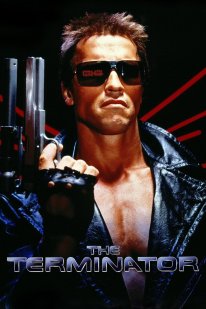
Worldwide recognition came in 1984 with The Terminator. Shot on a minimal budget, the film delivered:
- an original science-fiction concept,
- a harsh, almost industrial visual style,
- a strong philosophy about fate, technology, and humanity.
The film instantly became a cult classic and launched one of the most influential franchises in cinema history.
Forging an Auteur Style
In the years that followed, Cameron cemented a reputation as a director who could merge genre filmmaking with drama and deeply human stories:
- Aliens (1986) — a reimagining of horror in the form of military action.
- The Abyss (1989) — philosophical sci-fi about contact with the unknown, filmed with revolutionary underwater effects.
- Terminator 2: Judgment Day (1991) — a technological breakthrough in CGI and one of the most influential films of the 20th century.
It was here that Cameron established himself as a filmmaker who uses technology not for spectacle, but for emotion.
Titanic: Risk, Scale, and Triumph
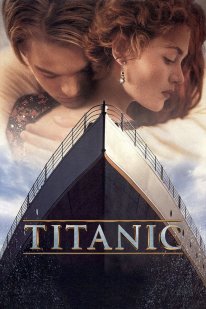
In 1997, Cameron released Titanic — a project widely considered insanely risky. A massive budget, enormous sets, and extraordinarily complex water shoots all fueled studio skepticism.
The result was historic:
- one of the highest-grossing films of all time,
- 11 Academy Awards,
- a global cultural phenomenon.
Titanic proved that an emotional melodrama can be the heart of a blockbuster, not its weakness.
Ocean Explorer and Engineer
After Titanic, Cameron stepped away from narrative filmmaking for years to focus on deep-sea exploration. He:
- completed dozens of dives to the wreck of the Titanic,
- developed his own submersibles,
- in 2012, made a solo dive to the Mariana Trench, becoming the first person to do it alone.
These expeditions directly influenced the visual language of his later films.
Avatar and a New Era of Cinema
In 2009, Cameron returned with Avatar, which:
- revolutionized 3D cinema,
- brought performance capture into the mainstream,
- created a fully digital world with a living ecosystem.
Avatar became the highest-grossing film in history (at the time) and opened a new era of visual storytelling.
The Avatar Saga and the 2020s
In the 2020s, Cameron focused on expanding the Avatar universe.
Avatar: The Way of Water (2022) emphasized:
- underwater ecosystems,
- the theme of family,
- ecological awareness.
In 2024–2025, Cameron continued work on the next installments of the saga, while also advancing new technologies in motion capture, underwater filming, and virtual production.
Themes and Philosophy
Key themes in Cameron’s films include:
- the conflict between humanity and technology,
- ecology and civilizational responsibility,
- strong female characters,
- survival and sacrifice,
- love as a driving force even in a techno-industrial world.
He consistently shows that progress without ethics leads to catastrophe.
Character and Reputation
Cameron is known as:
- a perfectionist,
- a tough leader,
- an engineer-like overseer of every stage of production.
But it is precisely this demanding nature that allowed him to push cinema forward, rather than reproduce ready-made formulas.
Comparing the Stages of James Cameron’s Career
| Period | Key Films | Main Innovation | Philosophical Theme |
| The “Metal” Era (1980s) |
The Terminator, Aliens |
Practical effects, animatronics |
Fear of AI, survival |
| The “Water” Era (1990s) |
The Abyss, Titanic |
Early CGI, large-scale sets |
Love and sacrifice, contact |
| The “Digital” Era (2000s–2025) |
Avatar, The Way of Water |
3D Fusion Camera, underwater MoCap |
Ecology, unity with the world |
Philosophy and Legacy
Cameron is a rare example of an “auteur-controller.” His perfectionism has become legendary, but it’s also what enables him to release works that don’t age for decades. At Minatrix.TV, we value Cameron’s films because behind the billion-dollar budgets there is always a simple, powerful story — about family, responsibility, and the future of our planet.
James Cameron Filmography (Director)
| Year | Film | Type | Worldwide Gross |
| 1982 |
Piranha II: The Spawning |
Feature film |
≈ $1M |
| 1984 |
The Terminator |
Feature film |
≈ $78M |
| 1986 |
Aliens |
Feature film |
≈ $131M |
| 1989 |
The Abyss |
Feature film |
≈ $90M |
| 1991 |
Terminator 2: Judgment Day |
Feature film |
≈ $520M |
| 1994 |
True Lies |
Feature film |
≈ $378M |
| 1997 |
Titanic |
Feature film |
≈ $2.26B |
| 2009 |
Avatar |
Feature film |
≈ $2.92B |
| 2022 |
Avatar: The Way of Water |
Feature film |
≈ $2.32B |
| 2025 |
Avatar: Fire and Ash |
Feature film |
≈ $851.6M (as of early January 2026) |
Documentaries and Special Projects
| Year | Title | Format | Notes |
| 2003 |
Ghosts of the Abyss |
Documentary |
Exploration of the Titanic |
| 2005 |
Aliens of the Deep |
Documentary |
Deep-sea ecosystems |
| 2012 |
Deepsea Challenge 3D |
Documentary |
Solo dive to the Mariana Trench |
Future Films (Announced)
| Year (planned) | Film | Status |
| 2029 |
Avatar 4 |
In production |
| 2031 |
Avatar 5 |
Planned |
Analysis on Minatrix.TV
In our catalog, you’ll find an in-depth breakdown of Cameron’s filmography, including:
- Expert evaluations: The impact of his work on modern sci-fi and action cinema.
- Technical deep dives: How the most complex scenes in film history were made.
- Community ratings: Comparing “classic” Cameron with his newer digital worlds.
Significance and Legacy
James Cameron is:
- an architect of the modern blockbuster,
- an inventor of 21st-century cinematic language,
- a rare example of a filmmaker-scientist.
He proved that technology in film is not the enemy of art when it serves story and emotion.
Editorial Conclusion
James Cameron is a director who thinks on the scale of planets, oceans, and civilizations. His films are not just spectacle, but a manifesto of faith in humanity, responsibility, and the future.
 HDIMDb 7.9KP 8