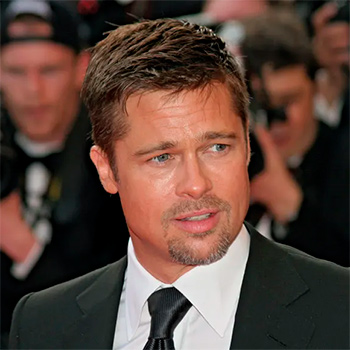
William Bradley Pitt is an American actor and producer, one of the key figures of contemporary Hollywood, whose career has become an example of a conscious rejection of easy choices. His path is a story of transformation—from a 1990s sex symbol to a thinking actor and producer shaping the agenda of auteur cinema in the 21st century.
Origins and Early Years: Starting from Zero
Brad Pitt was born on December 18, 1963, in Shawnee, Oklahoma, and grew up in Springfield, Missouri—provincial America with conservative values and clearly defined boundaries. His father worked as a manager for a transportation company; his mother was a school counselor. The environment was far removed from the arts, which later fostered in Pitt a deep inner resistance to conventions.
He studied journalism and advertising at the University of Missouri but dropped out two weeks before graduation and moved to Los Angeles with about $325 in his pocket. He would later describe this moment as pivotal—the point at which the option to “turn back” disappeared.
Hollywood from the Bottom: Craft and Survival
The early years in Los Angeles were extremely harsh. Pitt worked as a driver, a mover, a furniture deliveryman, and even promoted fast-food restaurants wearing a chicken costume. At the same time, he attended acting classes and went to dozens of auditions.
His early roles in television series and low-budget films provided the essentials—an understanding of the camera, timing, and discipline. Even then, directors noted that behind the photogenic appearance was an observant, restrained, and patient actor.
Breakthrough and the Trap of Appearance
The film Thelma & Louise (1991) turned Pitt into an instant star. His screen image became a symbol of sexual freedom and a new masculine charisma of the 1990s. Yet the success carried a risk—being locked into the role of a handsome but superficial hero.
Pitt’s response was principled: he deliberately began dismantling his own image, choosing roles in which physical attractiveness became not an advantage but an object of deconstruction.
The Partnership with David Fincher: An Era of Reinterpretation
For Brad Pitt, David Fincher became what Scorsese was to DiCaprio. Their collaboration marks an entire era of rethinking male beauty through suffering, fracture, and imperfection.
-
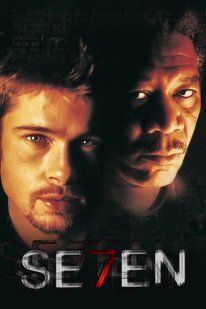
Se7en (1995) — a rejection of the heroic image in favor of an anxious, broken character.
-
Fight Club (1999) — Tyler Durden as a philosophical symbol of the late-century crisis of masculinity.
-
The Curious Case of Benjamin Button (2008) — a radical experiment with corporeality, age, and time.
It was with Fincher that Pitt ultimately established himself as an actor willing to be unpleasant, strange, and vulnerable if the idea demanded it.
Physical Transformation as a Tool
Brad Pitt is one of the few actors who uses the body not as decoration but as a dramaturgical instrument. His physical transformations are always subordinate to character:
-
emaciation and nervous tension in Fight Club,
-
gypsy-like physicality in Snatch,
-
rough, utilitarian masculinity in Fury.
For Pitt, physical form is part of the narrative, not a display of vanity.
Plan B Entertainment: An Ego-Free Producer
Pitt’s producing work through Plan B Entertainment constitutes a separate layer of his influence. Crucially, he often gives roles he could play himself to other actors if it strengthens the project.
Under his producing oversight came films such as:
-
12 Years a Slave,
-
Moonlight,
-
The Big Short.
Two of them won the Academy Award for Best Picture, cementing Pitt’s reputation as a non-egotistical producer for whom results matter more than on-screen presence.
Maturity and Tarantino
Collaboration with Quentin Tarantino ushered Pitt into a phase of calm, ironic maturity. In Once Upon a Time in Hollywood (2019), he played Cliff Booth—a laconic, physically dangerous, and morally grounded figure from a fading era.
The role earned him his first acting Oscar and became the culmination of a long journey—a recognition not of appearance, but of actorly gravitas.
2025–2026: “F1” and the Status of a Cinematic Athlete
In 2025–2026, Brad Pitt once again confirmed his status as the leading “cinematic athlete” of his generation with the ambitious motorsport project F1.
This is not merely a blockbuster, but a technological challenge:
The role highlighted a key dimension of his maturity—the ability to project a calm, confident masculinity, where age becomes not a limitation but a source of cinematic weight.
Acting Style and Themes
Pitt’s screen characters are united by:
He rarely “plays emotions,” favoring presence, pauses, and the physical sensation of the frame.
Angelina Jolie: Union, Rupture, and a Reassessment of Values
A separate and fundamentally important role in Brad Pitt’s biography was played by his relationship with Angelina Jolie. Their union, which began in the mid-2000s, became one of the most discussed and simultaneously most influential acting partnerships of its time—not only in media terms, but in an existential sense.
Meeting on the set of Mr. & Mrs. Smith coincided with a period of internal crisis for Pitt. By then he was already a global star, yet he later admitted to feeling a loss of direction and inner emptiness despite outward success. Jolie became the figure who pulled him out of inertia—by radically expanding the horizons of his life.
Family, Responsibility, and a Shift in Focus
Life with Jolie fundamentally changed the scale of his reality. Pitt became involved in:
Their family became multinational, and Pitt himself came to be publicly associated not only with cinema but with the responsibility of an adult in a world of catastrophe and inequality. It was during this period that he significantly intensified his producing activity through Plan B, backing socially and politically charged projects.
Importantly, this was the moment when Pitt definitively moved away from the image of a hedonist and solidified his place as a figure of mature, reflective Hollywood.
The Collapse of the Union and Inner Breakdown
The breakup with Jolie became one of the most difficult periods of Pitt’s life. It coincided with public legal conflicts, accusations, the loss of a familiar family structure, and—crucially—a reassessment of himself.
Later, Pitt spoke openly about:
-
his struggle with alcohol addiction,
-
the necessity of therapy,
-
and a painful yet necessary process of personal reconstruction.
This is a rare case in which a star of such magnitude did not attempt to silence a crisis, but acknowledged it as a point of growth.
After Jolie: Silence, Discipline, Maturity
The period following the breakup became a time of quiet, disciplined self-assembly for Pitt. He withdrew from public statements and focused on work, sobriety, and craft.
It was in this phase that the following emerged:
-
restrained, ironic roles,
-
the image of a man who does not prove strength, but radiates it,
-
a sense of inner stability clearly visible in his later work.
Many critics interpret the role of Cliff Booth in Once Upon a Time in Hollywood as a symbol of this new state—calm, taciturn, unhurried.
Significance and Legacy
Brad Pitt is a figure who:
-
outlived the cult of appearance,
-
rejected easy success,
-
became a bridge between mainstream and auteur cinema,
-
shaped a new model of the producer-curator.
Editorial Conclusion
Brad Pitt is not merely a movie star, but an architect of meaning and form, proving that true strength in cinema is born not from image, but from the ability to change, to take risks, and to yield to the idea.
 HDIMDb 7.3KP 8.1