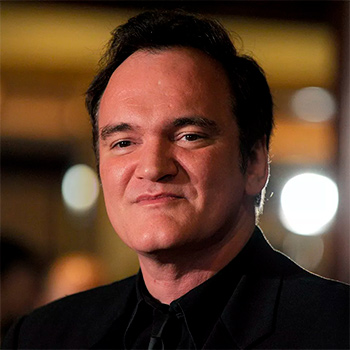
John Joseph Travolta is an American actor and singer—one of the most recognizable icons of late-20th-century popular culture and a rare example of a performer who has reinvented himself multiple times: from a 1970s television heartthrob and a disco-era dance phenomenon to a dramatic actor who reclaimed star status through auteur-driven cinema in the 1990s.
Early years and family
John Travolta was born on February 18, 1954, in Englewood, New Jersey. He grew up in a large family where the stage and the arts were part of everyday life: his mother was involved in theater and taught acting. That environment gave the future actor early confidence in front of an audience and a practical understanding of the craft—not as an abstract dream, but as a disciplined profession.
Travolta chose the stage early, stepping away from a conventional educational path. The decision proved decisive: from a young age he internalized discipline, rehearsal work, and physical expressiveness—qualities that would later become his signature.
Television and first success
Travolta rose to wide recognition in the mid-1970s thanks to the sitcom Welcome Back, Kotter. Television made him instantly familiar and taught him a crucial skill: the ability to feel “close” to the audience. He didn’t come across as an untouchable star, but as someone “from real life,” which helped build lasting popularity.
That combination of recognizability and humanity became the foundation of his entire career.
The disco era and global breakthrough
The true breakthrough came in 1977 with “Saturday Night Fever”. His portrayal of Tony Manero turned Travolta into a global symbol of the disco era. The character wasn’t just a dancer—he was a portrait of a generation searching for a way out of social confinement through music, rhythm, and nocturnal freedom.
A year later, the success was cemented by the musical “Grease”, which definitively established Travolta as an international star. In that period he became not merely a popular actor but a cultural phenomenon, influencing fashion, movement, and the behavior of an entire generation.
Key films
-
Saturday Night Fever (1977) — the role that made Travolta a symbol of the disco era
-
Grease (1978) — a landmark musical and one of the most popular films of its time
-
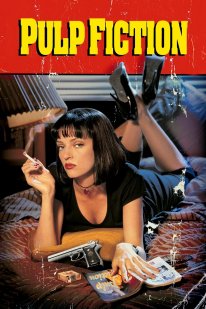
Pulp Fiction (1994) — the career-defining turning point and his return to Hollywood’s top tier
-
Get Shorty (1995) — a charismatic crime comedy
-
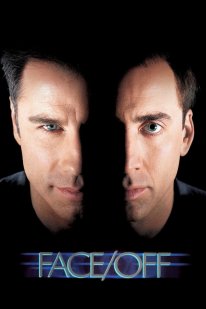
Face/Off (1997) — a quintessential 1990s action classic
-
Primary Colors (1998) — a political drama that showcases his range
-
Hairspray (2007) — a mature return to the musical genre
Test of time: the 1980s
After his peak came a more complicated period. In the 1980s, Travolta continued to work actively, but his success was no longer automatic. This phase tested his professional resilience: he explored new genres, moved away from the dance-hero image, and searched for a different acting identity.
That groundwork ultimately made his later comeback possible—without relying on old clichés.
Second act and 1990s recognition
The decisive moment was his role in Quentin Tarantino’s “Pulp Fiction” (Quentin Tarantino). Playing Vincent Vega became a full reset: the ironic, anxious, and dangerous character shattered the audience’s old expectations.
The film didn’t just return Travolta to the spotlight—it made him a star for a new era, equally in demand in both auteur cinema and mainstream projects.
Mature period and genre flexibility
In the years that followed, Travolta deliberately refused to be confined to a single canonical image. He worked across action, drama, comedy, and musical films, demonstrating rare career elasticity. His return to the musical genre later in life showed that dance and music were not nostalgia for him, but an organic way of existing on screen.
Personal life and character
John Travolta was married to actress Kelly Preston for nearly three decades. His life included painful personal losses that affected his level of public visibility and the roles he chose in recent years. Even so, he consistently emphasized family as a priority over the noise of the industry.
Another defining facet of his personality is his serious passion for aviation: Travolta is a licensed pilot for whom flying has become a form of focus and inner balance.
Key career milestones
| Year | Film | Significance |
| 1977 |
Saturday Night Fever |
Launched “disco fever” and earned his first Oscar nomination. |
| 1978 |
Grease |
Achieved cult status and cemented him as Hollywood’s leading romantic idol. |
| 1994 |
Pulp Fiction |
A global comeback and a reinvention of his screen persona. |
| 1997 |
Face/Off |
Peak success in action cinema and a showcase of his range. |
Aviation: discipline off screen
Travolta is not just an enthusiast but a certified pilot. He holds licenses to operate jet airliners, including the Boeing 707 and Gulfstream. For him, flying is a form of concentration that mirrors his approach to acting: precision, responsibility, and control.
Editorial take
John Travolta is more than a 1970s screen icon. His biography is a story of how fame becomes a craft—and how crises become turning points. He moved from being a generational symbol to an actor built for the long distance, retaining relevance and professional weight.
Travolta is the kind of actor who creates an atmosphere before his first line. His screen presence is felt through rhythm, pauses, and physical expressiveness. He doesn’t fear transformation and doesn’t cling to past images. That is why his best roles don’t age: they continue to work on the level of emotion, not nostalgia.
Did you know? The famous dance of Vincent Vega and Mia Wallace in Pulp Fiction was largely improvised—drawing on Travolta’s dance past, but delivered with the ironic energy of a killer who looks like he’s “dozing off while standing.”
 HDIMDb 8.8KP 8.7