 HDIMDb 8.6KP 8.4
Terminator 2: Judgment Day (1991)
A legendary sci-fi action film about humanity versus machines, fate, artificial intelligence, and the fight to change the future.
0
0
634

Arnold Alois Schwarzenegger is an Austrian-American actor, bodybuilder, entrepreneur, and politician—one of the most influential figures in mass culture from the late 20th to the early 21st century. His biography is not merely an “American Dream,” but a carefully engineered path of a man who consciously built an empire—in sports, business, cinema, and politics. Schwarzenegger became a symbol of discipline, strategic thinking, and the ability to turn weaknesses into a brand.
Arnold Schwarzenegger was born on July 30, 1947, in the village of Thal near Graz, Austria. He grew up in the harsh postwar reality, in a family with a strict upbringing. These conditions shaped an early inner principle: survival through willpower and order.
As a teenager, Arnold set a goal that seemed absurd for a young man from provincial Austria: to become the world’s best bodybuilder and move to the United States. Importantly, this goal was never romantic—it was pragmatic. He saw sport as a tool to reach a higher level of life.
In the 1960s–1970s, Schwarzenegger revolutionized bodybuilding. He won the “Mr. Olympia” title seven times, transforming strength sports from a niche pursuit into a spectacular industry.
Arnold stood out not only for his physique, but for his charisma, ability to sell an image, and strategic mindset. He was among the first to understand that the body is media—and the stage is a business platform. The film Pumping Iron cemented his status as a figure far beyond sport.
A lesser-known but crucial fact: Schwarzenegger became a millionaire before playing Conan—and not through sports or movies. After moving to the U.S., he invested in real estate and construction, skillfully reinvesting profits.
He came to America not just to lift weights, but to build an empire. This business mindset later allowed him to:
This makes him one of the clearest examples of a self-made man in pop culture history.
The start of his film career was difficult. His accent, long surname, and unconventional appearance were seen as obstacles. Schwarzenegger did what he knew best: he turned weaknesses into strengths.
The breakthrough came with Conan the Barbarian, but true legend followed with The Terminator. An interesting fact: Arnold originally auditioned for the role of Kyle Reese, humanity’s protector. But the director, seeing him, realized this man could not be an “ordinary soldier”—he had to play the machine. Thus one of cinema’s most iconic characters was born.
Minimal dialogue, monumental physicality, and a cold presence turned the Terminator into a cultural code of the era.
In the 1980s–1990s, Schwarzenegger became the world’s leading action hero. His characters were nearly mythological, yet he skillfully infused them with self-irony, dismantling pathos from within. Unlike many peers, Arnold always maintained control over contracts, budgets, and his personal brand.
In 2003, Schwarzenegger became governor of the most populous and economically powerful U.S. state—California. His political career was controversial but illustrative: he was not a ceremonial figure and actively engaged in governing a complex system.
Special attention deserves his environmental stance. Schwarzenegger became known as a “green Republican”, promoting environmental initiatives and energy reforms. He continues this work today, organizing an international climate summit in Vienna and advocating for sustainable development.
In the 2020s, Arnold experienced a new wave of popularity:
Schwarzenegger is known for a pragmatic life philosophy, often expressed through simple but uncompromising principles.
Arnold Schwarzenegger is not just an actor or an athlete. He is a man who proved that success can be designed when ambition, hard work, and strategy align. His path is a story not about muscles, but about a winner’s mindset.
Schwarzenegger is a figure beyond time. He transformed personal limitations into capital, physical power into the language of cinema, and popularity into a tool for real change. In a world of fast heroes and short memory, Arnold remains a rare example of someone who built not an image, but a system—and it still works today.
HDIMDb 8.6KP 8.4
A legendary sci-fi action film about humanity versus machines, fate, artificial intelligence, and the fight to change the future.
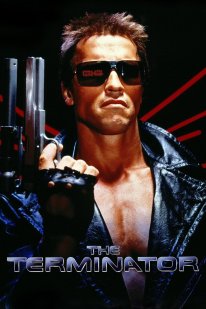 HDIMDb 8.1KP 8
The Terminator (1984) is a cult sci-fi thriller by James Cameron about AI, fate, and survival. A cold techno-noir classic that reshaped science fiction cinema.