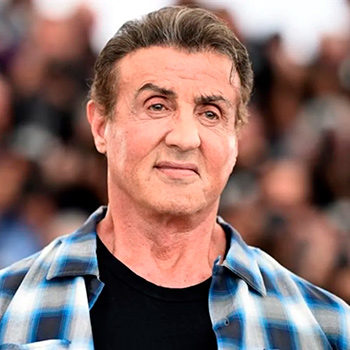
Full name: Michael Sylvester Gardenzio Stallone
Date of birth: July 6, 1946
Place of birth: New York City, USA
Occupations: actor, screenwriter, director, producer
Iconic roles: Rocky Balboa, John Rambo
Status: one of the most influential figures in the history of popular cinema
The story of Sylvester Stallone is a rare case in which the Hollywood myth almost completely matches reality. It is the journey of a man who was denied opportunities for a long time—until he turned his own vulnerability into a source of strength.
Early years: a physical defect as the starting point of character
Sylvester Stallone was born with a severe birth injury: damage to a facial nerve partially paralyzed the left side of his face. This explains his distinctive “slurred” speech, asymmetrical facial expressions, and raspy voice—traits that would later become his trademark.
As a child, Stallone often faced ridicule and a constant feeling of not “fitting in.” He attended more than ten schools and learned an early lesson: if the system doesn’t accept you, you have to build yourself.
Physical limitations did not break him—on the contrary, they shaped his character. Bodybuilding, boxing, and acting became not hobbies but means of self-assertion. He studied drama at Miami Dade College and later at the University of Miami, but eventually dropped out, betting on a career that at the time seemed almost impossible.
The road to “Rocky”: poverty, rejection, and a script that changed everything
The early 1970s were a time of extreme hardship for Stallone. He slept in bus stations, sold personal belongings, and at one point was forced to sell his dog for just $25 because he couldn’t afford to feed him.
The turning point came after the boxing match between Muhammad Ali and Chuck Wepner. Inspired by what he saw, Stallone wrote the screenplay for Rocky in just a few days. For him, it wasn’t just a script—it was his last chance.
The script attracted studio interest, but with one condition: the lead role had to go to an established star. Stallone refused—on principle. He put everything on the line, insisting that only he could play Rocky.
In the end, he received $35,000, the lead role, and an opportunity that completely changed his life. Rocky (1976) became a sensation:
- 10 Academy Award nominations
- 3 wins, including Best Picture
- An immediate global cultural impact
The 1980s: Rambo, the cult of strength, and the mythology of the hero
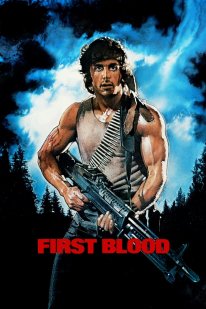
In 1982, First Blood was released, presenting John Rambo not as a mindless “killing machine” but as a traumatized Vietnam War veteran. It was a dark and painful story about PTSD and alienation.
Later installments, however, transformed Rambo into the Cold War-era archetype of the super-soldier. Alongside Rocky III–IV, Stallone became a symbol of the 1980s:
- masculinity
- individualism
- personal struggle against the system
Importantly, he didn’t just play these heroes—he wrote them himself. That’s why even in his most straightforward action films, his characters start from defeat rather than victory—and that’s what resonated with audiences.
The rivalry with Schwarzenegger: a race that defined an era
In the 1980s–1990s, action cinema had two faces—Sylvester Stallone and Arnold Schwarzenegger. Their rivalry was real: roles, box office numbers, screen personas, media attention. Each new film by one automatically became a challenge for the other.
Over time, competition turned into respect and collaboration. Their joint projects cemented the image of the “classic action hero”—physically powerful yet emotionally accessible—and permanently secured their status as genre icons.
Crisis, reinvention, and a second wind
The 1990s were a difficult period for Stallone. Box office failures, harsh criticism, and attempts to change his screen image (Judge Dredd, Stop! Or My Mom Will Shoot) showed that the persona he had created was beginning to work against him.
However, this period proved necessary for reinvention. Stallone had to accept age, mistakes, and a changing film industry—in order to return in a new form.
In 2006, Rocky Balboa was released—unexpectedly quiet and philosophical, a film about aging, loss, and dignity. It was followed by Rambo (2008)—brutal, dark, and overtly anti-war in tone.
A new era: legacy and recognition
In the 2010s, Stallone reclaimed his iconic status—but now as the guardian of his own myth.
- The Expendables — an homage to 1980s–1990s action cinema
- Creed (2015) — passing the torch to a new generation
For his role as Rocky Balboa in Creed, he received:
- a Golden Globe Award
- an Academy Award nomination nearly 40 years after the first
Interesting facts and lesser-known details
- He never tried to hide or “fix” his speech impediment, considering it part of his identity
- Most of his iconic films were written by him, including all Rocky and Rambo installments
- He bought his dog back after the success of Rocky, paying hundreds of times more
- A rare case of being nominated for an Oscar as both actor and screenwriter for the same film
- He is also a painter; his works have been exhibited in museums and galleries
- Rocky IV became a symbol of the “cinematic West” in the late 1980s USSR
Conclusion
Sylvester Stallone is more than just an action movie star. He is an authored myth, created by a man who didn’t fit into the system for a long time—but ultimately forced it to play by his rules.
It’s not about how hard you hit. It’s about how hard you can get hit and keep moving forward.
Frequently asked questions about Sylvester Stallone
- Is it true that Stallone appeared in a porn film?
Short answer: yes, but with important context.
In the early 1970s, while facing extreme poverty, Stallone appeared in the low-budget erotic film The Party at Kitty and Stud’s (1970). This was not pornography in the modern sense, but soft erotic cinema from the pre-hardcore era. After the success of Rocky, the film was re-released under a more provocative title, which fueled the myth of a “porn career.” Stallone himself has repeatedly said it was a matter of survival, not choice.
- Why does Stallone have such unusual speech and facial expressions?
At birth, a facial nerve was damaged due to a delivery complication (forceps). This caused partial paralysis of the left side of his face, resulting in his distinctive speech and asymmetrical expressions, which later became part of his recognizable style.
- Is it true that he wrote the screenplay for “Rocky” himself?
Yes. Stallone wrote the script in just a few days, inspired by a Muhammad Ali fight. He refused to sell it to a studio unless he was allowed to play the lead role, despite being offered significant money. This is considered one of the most principled decisions in Hollywood history.
- How many times was Stallone nominated for an Oscar for Rocky?
Twice—for the same character:
- 1977 — Best Actor (Rocky)
- 2016 — Best Supporting Actor (Creed)
A unique case with nearly a 40-year gap.
- Was Stallone really a good boxer?
He was not a professional boxer, but he trained seriously, sparred with real fighters, and sustained injuries during filming. During Rocky IV, Dolph Lundgren actually fractured his chest with a punch—Stallone spent several days in intensive care.
- Why did Rambo evolve from a dramatic character into a symbol of militarism?
The first film (First Blood) is an anti-war drama about PTSD. The sequels were reshaped by studios and the Cold War era, turning the character into a “one man against all” archetype. Stallone later acknowledged that commercialization simplified the character.
- Did he really sell his dog?
Yes. During a period of financial desperation, Stallone sold his bullmastiff for $25. After the success of Rocky, he tracked down the buyer and bought the dog back for hundreds of times more.
- Is it true that Stallone is a painter?
Yes. He seriously practices painting in an expressive, almost abstract style. His works have been exhibited in galleries and museums, including the Russian Museum in Saint Petersburg, where the exhibition caused significant public attention.
- Why wasn’t he considered a “serious actor” for a long time?
Because of his 1980s action-hero image and commercial cinema. However, Rocky, Cop Land, and Creed proved that Stallone is a dramatic actor with an authorial mindset, simply working within popular genres.
- Who was his main competitor among 1980s actors?
Unofficially—Arnold Schwarzenegger. Their rivalry was real, but eventually turned into friendship and collaboration (The Expendables).
- Which film does Stallone consider the most personal?
He has repeatedly said that the first “Rocky” is his autobiography in metaphorical form: poverty, rejection by the system, stubbornness, and faith in a chance.
- Why is Stallone still important to pop culture?
Because he created two mythological archetypes—Rocky and Rambo—that have outlived eras, ideologies, and even the films themselves. It’s a rare case where characters become part of collective consciousness.
 HDIMDb 7.7KP 7.9