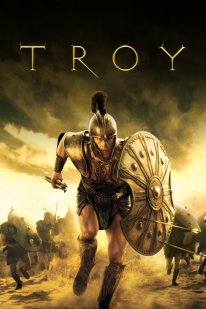
Movie Troy (2004)
In year 1250 B.C. during the late Bronze age, two emerging nations begin to clash. Paris, the Trojan prince, convinces Helen, Queen of Sparta, to leave her husband Menelaus, and sail with him back to Troy.
About the movie Troy
An epic historical drama directed by Wolfgang Petersen, inspired by Homer’s Iliad. Troy is a grand reimagining of an ancient myth, where the gods recede into the background and the focus shifts to people — their ambitions, passions, and the inevitability of fate.
The film presents the ancient world not as legend, but as the brutal reality of war, where glory and heroism always come hand in hand with bloodshed and loss.
Plot and Concept
At the heart of the story is the Trojan War, ignited after Paris abducts Helen, the wife of Menelaus, king of Sparta. The event becomes the pretext for a decade-long conflict between Troy and the united Greek armies.
Against the backdrop of the siege, the fates of key characters unfold:
-
Achilles — the greatest warrior of his time, torn between a hunger for glory and contempt for war;
-
Hector — Troy’s defender, the embodiment of duty, honor, and responsibility;
-
Paris — a romantic whose personal decision leads to catastrophe;
-
Helen — a symbol of desire and the destructive power of choice.
The film contrasts the personal motives of its heroes with the scale of historical tragedy, highlighting how individual passions can reshape the course of history.
Themes and Ideas
Troy raises fundamental questions:
-
glory and immortality — what matters more: a long life or the memory of future generations;
-
war as inevitability — the conflict is shown not as heroism, but as the consequence of human pride;
-
honor and choice — Hector and Achilles represent two opposing views of war;
-
fate — the heroes recognize destiny, yet cannot escape it.
The film deliberately avoids divine intervention, emphasizing that the greatest destroyers are human beings themselves.
Character Portrayals
Achilles — Brad Pitt
A charismatic, physically formidable warrior who despises kings yet craves eternal glory. In Troy, Achilles is not a flawless hero, but a man fully aware of the price of his own rage.
Hector — Eric Bana
The moral center of the film. His Hector fights not for fame, but for his family and his city, which makes him the story’s most tragic figure.
Visual Scale and Battles
The film stands out for:
-
large-scale battle sequences,
-
meticulously recreated ancient armor,
-
fight choreography — especially the duel between Achilles and Hector,
-
a palpable sense of the physical weight of combat.
The camera portrays war as dirty and exhausting, stripped of romantic gloss.
Music and Atmosphere
The score by James Horner amplifies the story’s tragic scope. It blends epic grandeur with grief, emphasizing the inevitability of death and loss rather than the triumph of victory.
Cultural Significance
Troy became one of the most prominent historical epics of the 2000s:
-
it brought the ancient epic to a mass audience;
-
set a visual benchmark for later sword-and-sandal films;
-
sparked debate about interpreting myth without gods or the supernatural.
Editorial Conclusion
Troy is a film about the price of glory and the destructive power of human ambition.
It strips myth of romance and presents war as a tragedy of choices, where every hero is doomed in advance.
An epic drama about how personal pride can destroy an entire civilization.
Player / Trailer
Leave a comment