Movie Badut Gendong (2026)
Review of "Deadly Dance" / "Badut Gendong" (2026): an Indonesian horror film by Charles Gozali about a clown, loss, a curse, and dark revenge.
About the movie Badut Gendong
Review of “Deadly Dance” / “Badut Gendong” (2026): a dark Indonesian horror film about grief, a curse, and revenge
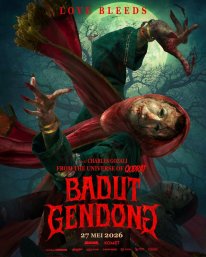
“Deadly Dance” / “Badut Gendong” is a 2026 Indonesian horror film directed by Charles Gozali, in which a story of personal tragedy gradually turns into a brutal mystical parable about pain, violence, and a dark force awakened by human despair. At the center of the plot is Darso, a street performer dressed as a clown who dreams of a better life for his family.
The film begins with a strong dramatic premise: Darso loses his wife Darsi and their unborn child because of the cruelty of gangsters. This is not just a setup for horror, but an emotional wound from which the entire nightmare grows. Unable to accept the deaths of his loved ones, the hero commits a terrifying act: he hides his wife’s body inside the clown doll he once used in his street performances. In this way, a familiar image of folk entertainment becomes a vessel of death, trauma, and madness.
The main feature of “Badut Gendong” is that the film combines several layers of Indonesian genre cinema at once. There is social drama about poverty and powerlessness, rural mystical horror, a revenge story, and elements of a bloody thriller. The conflict with a greedy developer, the tension within the village, and the ritual that awakens the curse expand Darso’s personal tragedy into a collective nightmare.
The image of the clown works especially effectively. In Western horror, the clown has long been a figure of fear, but in “Deadly Dance” this motif takes on a local and more painful meaning. The costume and the doll are not just frightening props, but symbols of humiliation, poverty, and the attempt to survive at any cost. Darso used to perform in order to earn a living, but after the tragedy his stage image becomes a mask of grief and a conduit for dark power.
The film is built on the contrast between the outward brightness of the clown image and the inner darkness of what is happening. The more absurd and carnivalesque the mask looks, the more disturbing the violence behind it feels. This makes the horror not only spectacular, but also psychologically uncomfortable: fear is born not only from the monster itself, but from the understanding that real human pain stands behind the curse.
Charles Gozali uses the genre not as a simple chain of jump scares, but as a space for exploring the consequences of loss. Darso gradually loses the boundary between love, grief, and destruction. His desire to preserve a connection with his dead wife turns into obsession, and obsession turns into a path toward violence. That is why the film is perceived not only as a story about a cursed clown, but also as a dark drama about a man whose grief has deprived him of inner support.
The storyline involving a village gripped by conflict adds a social edge to the film. Evil does not appear out of nowhere here: it is fueled by greed, fear, cruelty, impunity, and accumulated resentment. The mystical curse becomes a reflection of a decay that already exists, while the murders feel not like a random series of horror episodes, but like part of a world where violence has long become the norm.
At the same time, “Deadly Dance” remains a genre film aimed at fans of Asian horror. Atmosphere, dark visuals, bodily fear, rituals, and the feeling that the past cannot be buried without consequences are important to it. The film may seem overloaded with plot elements, but it is precisely this mixture of drama, mysticism, and action that creates its nervous rhythm.
“Deadly Dance” / “Badut Gendong” (2026) is a dark and emotionally heavy Indonesian horror film about a man whose personal tragedy pushes him to the edge of madness. It is a story about grief that finds no release, a village infected by fear, and a clown mask behind which there is not laughter, but death. The film may interest viewers who appreciate folk horror, Asian mysticism, and stories about a curse born from human pain.
Player / Trailer
Leave a comment