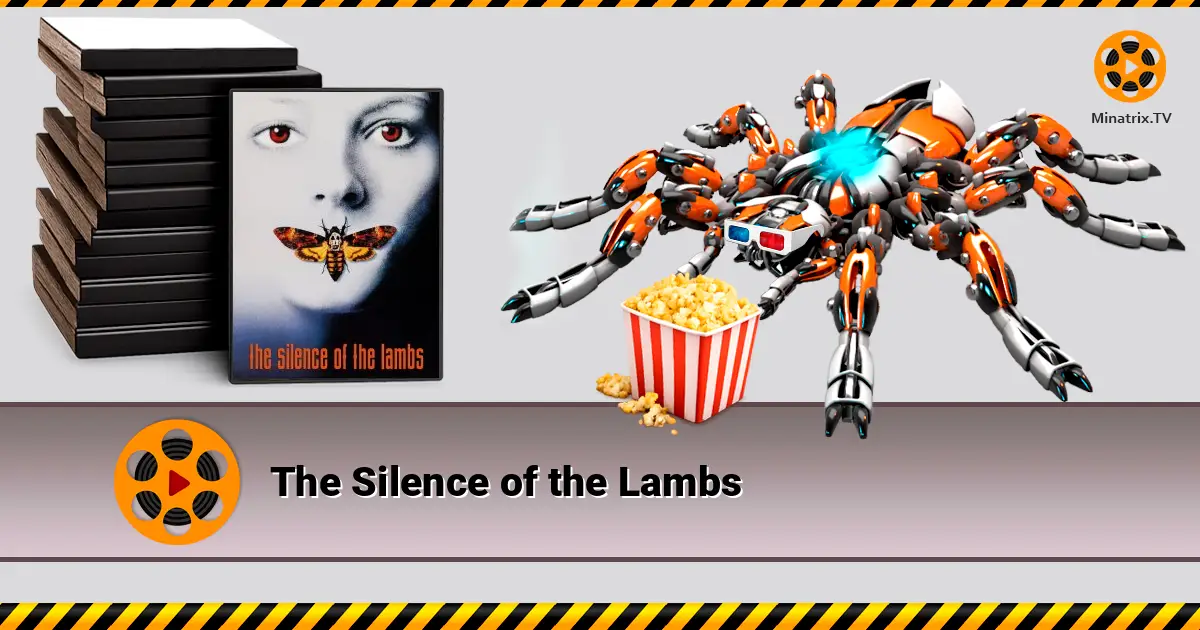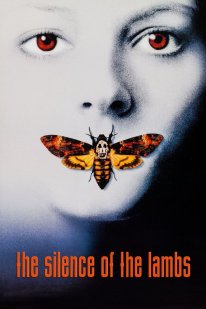
Movie The Silence of the Lambs (1991)
Clarice Starling is a top student at the FBI's training academy. Jack Crawford wants Clarice to interview Dr. Hannibal Lecter, a brilliant psychiatrist who is also a violent psychopath, serving li...
About the movie The Silence of the Lambs
One of the most influential psychological thrillers in the history of cinema, a film by Jonathan Demme that forever reshaped the genre. The Silence of the Lambs is not merely a story about serial killers, but an intellectual thriller about power, fear, and manipulation, where psychological pressure is far more important than explicit violence.
The film became a rare case of absolute recognition, winning all five major Academy Awards (Best Picture, Director, Actor, Actress, and Screenplay) — an achievement attained by only a handful of films.
Plot and Dramaturgy
At the center of the story is young FBI trainee Clarice Starling, who is assigned to interview an imprisoned serial killer and brilliant psychiatrist, Hannibal Lecter.
Her mission is to gain psychological insight that could help capture another murderer known as Buffalo Bill.
However, the investigation quickly turns into a psychological duel. Lecter does not help for free: he demands personal confessions, forcing Clarice to confront her childhood traumas, fears, and insecurities. Each dialogue becomes an exchange of power, where words are more dangerous than weapons.
The film deliberately abandons the traditional detective structure. The search for the criminal is secondary to the heroine’s inner journey — her formation as a person in a world dominated by violence, male aggression, and institutional pressure.
Psychology and Meaning
The Silence of the Lambs operates on several levels:
-
Fear as a form of control — Lecter terrifies not through actions, but through intellect and absolute calm.
-
Manipulation through vulnerability — he sees through people and exploits their weaknesses.
-
A female perspective in a male-dominated world of power — Clarice constantly faces distrust, sexism, and implicit threat, making her journey especially tense.
The film’s title is metaphorical: the “silence of the lambs” symbolizes an attempt to silence an inner scream — a trauma that cannot be erased, only understood.
Direction and Visual Language
Jonathan Demme employs visual techniques that later became canonical:
-
direct eye contact with the camera during dialogue, placing the viewer in Clarice’s position;
-
tight close-ups without editorial distance, creating a sense of invasion into personal space;
-
a cold, sterile color palette that emphasizes the institutional nature of evil.
The camera does not romanticize violence — it captures discomfort, making the viewer a participant in psychological pressure.
Acting Performances
Hannibal Lecter — Anthony Hopkins
One of the most terrifying performances in film history. Hopkins appears on screen for less than 20 minutes, yet completely dominates the film. His Lecter is the embodiment of cold intellect, where evil is stripped of chaos and emotion.
Clarice Starling — Jodie Foster
Foster creates a portrait of a vulnerable yet internally strong heroine. Her Clarice is not an “action character,” but a person who overcomes fear through understanding, not brute force.
Sound and Music
Composer Howard Shore delivers a restrained, unsettling score. The music is almost imperceptible, yet constantly amplifies the sense of looming threat.
Silence itself becomes a full-fledged dramatic tool — at times more frightening than any scream.
Cultural Impact
The Silence of the Lambs had a profound influence on cinema and television:
-
it established the standard for the intellectual thriller;
-
redefined the image of the serial killer in popular culture;
-
influenced dozens of films and TV series about profilers and criminal psychology;
-
turned Hannibal Lecter into a pop culture icon.
Editorial Conclusion
The Silence of the Lambs is a thriller on an entirely different level, where fear is born not from blood, but from intellect and observation.
It speaks about power, identity, and inner growth, remaining relevant decades later. A rare example of a film that simultaneously terrifies, analyzes, and provokes thought.
One of the most precise and mature films in the history of the genre.
Player / Trailer
Leave a comment