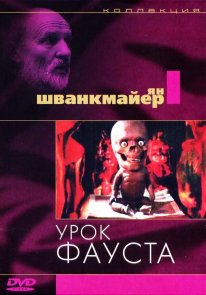
Cartoon Lekce Faust (1994)
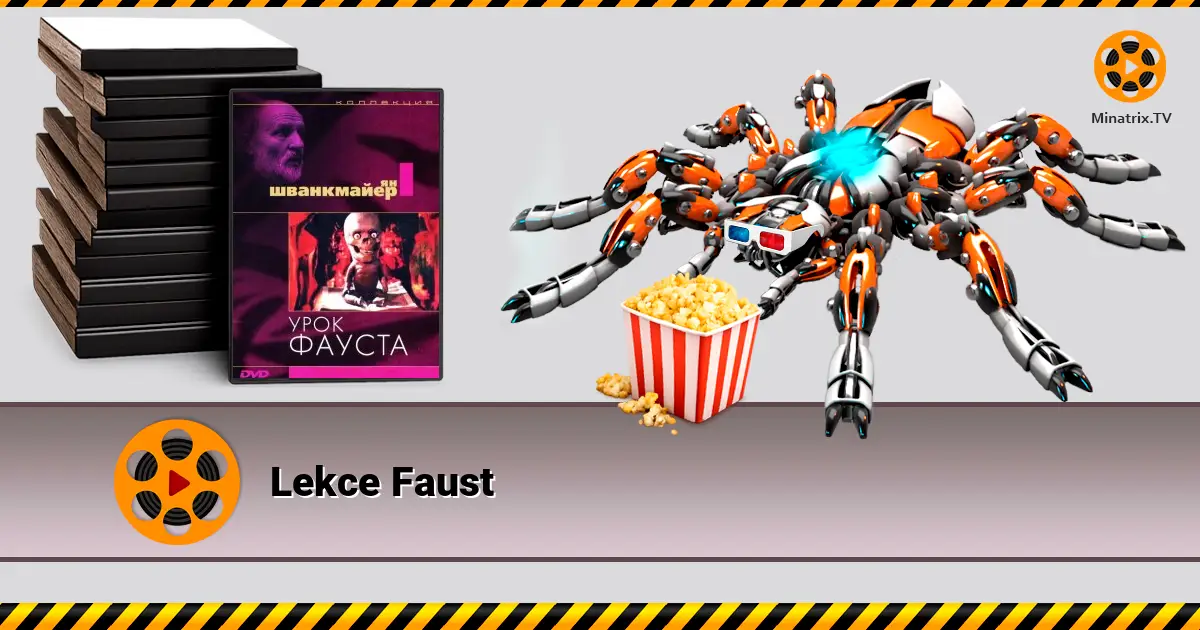
Faust (1994) – Jan Švankmajer's surreal animated film. Explore mystical Prague, where playing with the myth of Faust turns into reality.
About the cartoon Lekce Faust
In 1994, the distinguished Czech animator Jan Švankmajer presented his interpretation of the eternal myth of Faust to the public. The film, aptly titled "Faust's Lesson," doesn't just retell the familiar story of a man who sold his soul to evil, but transforms it into a deeply surreal and visually captivating journey. This unconventional cinematic work, blurring the lines between reality and fantasy, invites the viewer to immerse themselves in a unique world woven from a blend of animation techniques and hyperrealism.
Plot (no spoilers)
The narrative of "Faust's Lesson" begins with the protagonist, an ordinary man, becoming entangled in the labyrinths of mystical Prague. Wandering its narrow, mysterious streets with an enigmatic map in hand, he stumbles upon an abandoned attic. Here, amidst dust and oblivion, he discovers an old puppet theatre, and in the middle of the room lies a treasured tome – Goethe's "Faust." Trying on Faust's costume and stepping into his character, the hero initially perceives it as an innocent diversion. However, very soon, the game transitions into a terrifying reality, and his journey leads him to the mysterious laboratory of a famous alchemist. The viewer witnesses how live actors, clay puppets, and giant marionettes interact in this bizarre and at times eerie world, creating a unique atmosphere of Faustian tragedy.
Why it's worth watching
- Visual Innovation: Jan Švankmajer masterfully combines live actors, clay animation, and puppet theatre, creating a unique, unparalleled visual experience. It's a true feast for the eyes of those who appreciate cinematic experimentation.
- Depth of Interpretation: The film offers a fresh and profound look at the classic myth of Faust, reinterpreting it in the context of modern surrealism, allowing familiar themes to be viewed from a new perspective.
- Švankmajer's Directorial Genius: This is one of the master's seminal works, showcasing his signature style and ability to create an uncomfortable yet captivating atmosphere, exploring human fears and desires through the lens of absurdity.
- Atmosphere of Mystical Prague: The city becomes a full-fledged character, its narrow streets and ancient buildings adding a unique flavor and mystery to the film, enhancing the sense of immersion in the mystical.
- Non-linear Narrative: The transition from play to reality, from everyday life to alchemy, prompts reflection on the boundaries of consciousness and the cost of dealing with the unknown.
Themes
The central theme of "Faust's Lesson," of course, is Faust's eternal dilemma – the temptation of knowledge and power at the cost of one's own soul. The film deeply explores the boundaries between reality and fantasy, play and destiny, emphasizing how easily a person can be consumed by their own passions and ambitions. It also raises the theme of immersion in mystical and ancient alchemical knowledge, showing their dual nature – both as a source of insight and a path to ruin. Prague, as a labyrinth of consciousness and physical space, serves as a metaphor for the human journey, full of unknown corners and potential dangers.
Verdict
"Faust's Lesson" is not just an animated film; it's a hypnotic dive into the depths of the human subconscious and cultural myth, presented through the prism of an extraordinary artistic vision. Jan Švankmajer, with his ensemble of actors, including Jan Kraus and Viktoria Knotková, creates a work that challenges traditional perceptions of animation and tells a story that remains relevant and unsettling. If you appreciate unique auteur cinema, surrealism, and bold formal experiments, this film will be a true discovery for you and leave a lasting impression.
Player / Trailer
Leave a comment