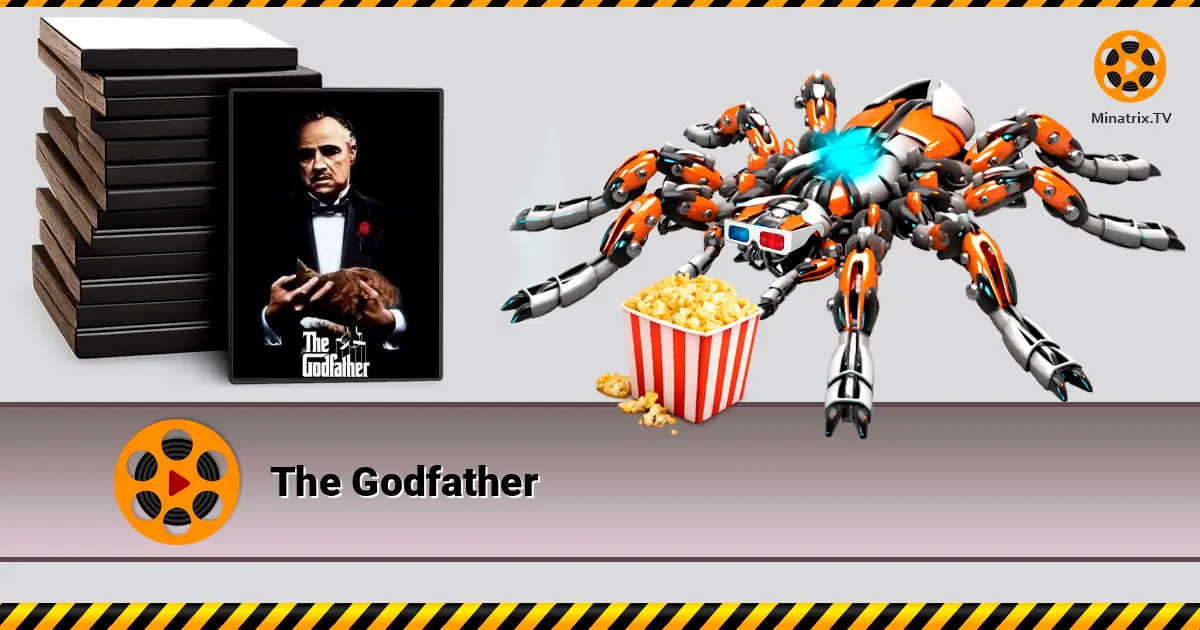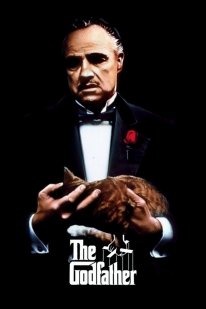
Movie The Godfather (1972)
Spanning the years 1945 to 1955, a chronicle of the fictional Italian-American Corleone crime family. When organized crime family patriarch, Vito Corleone barely survives an attempt on his life...
About the movie The Godfather
The Godfather (1972) is a crime drama by Francis Ford Coppola, widely regarded as one of the greatest films in cinema history. The film redefined the gangster genre, transforming the story of a mafia family into a tragedy of power, family, and moral decay, comparable to the classics of world literature.
Plot and Concept
At the center of the film is the Corleone family, one of the most powerful mafia dynasties in New York. Don Vito Corleone builds his empire not only on force, but on a system of personal obligations, loyalty, and unspoken rules.
His youngest son, Michael, initially tries to stay away from the criminal business, but a chain of violence and betrayals gradually pulls him into the world he sought to escape. The film’s story is one of slow transformation: from an outside observer to a cold-blooded heir to power.
Critical Analysis
The Godfather is an example of perfectly constructed auteur cinema, where every detail serves the central theme.
Coppola deliberately avoids overt action in favor of internal tension. Violence in the film is not spectacular — it is rare, sudden, and final.
The visual style is of particular importance: dark interiors, soft contrast lighting, and a restrained camera create the sense of a closed world where power is transferred not through words, but through glances and silences.
Michael Corleone becomes one of the most complex antiheroes in film history — his journey illustrates how the desire to protect one’s family leads to the loss of humanity.
Notable Facts
- The film won 3 Academy Awards, including Best Picture.
- The role of Don Vito Corleone gave Marlon Brando one of the most iconic screen performances of all time.
- The film is based on the novel of the same name by Mario Puzo, who also co-wrote the screenplay.
- Many of the film’s lines became part of popular culture.
- The Godfather established the canon of serious gangster cinema for decades to come.
Soundtrack and Musical Theme
The score was composed by Nino Rota. The main theme — a melancholic, almost funeral melody — became one of the most recognizable motifs in cinema history.
The soundtrack emphasizes the Italian roots of the Corleone family and heightens the sense of inevitability. The music is used sparingly and precisely, underscoring key moments without overpowering the drama.
Editorial Conclusion
The Godfather is not a film about the mafia, but a film about power.
About how a structure built to protect family ultimately destroys the very idea of morality. The film remains relevant because it speaks a universal language — about the cost of decisions, responsibility, and a legacy that cannot be escaped.
Player / Trailer
Leave a comment