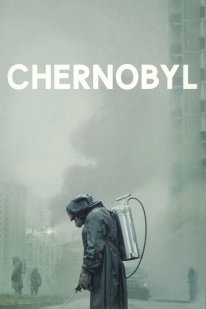
Serie Chernobyl (2019)
The true story of one of the worst man-made catastrophes in history: the catastrophic nuclear accident at Chernobyl. A tale of the brave men and women who sacrificed to save Europe from unimaginable disaster.
About the series Chernobyl
“Chernobyl” (2019) is a historical miniseries that became one of the most precise and uncompromising television statements about the greatest man-made disaster of the 20th century. The project presents the Chernobyl Nuclear Power Plant accident not as a chain of coincidences, but as the result of systemic lies, bureaucracy, and fear of the truth.
Concept and Story
The series meticulously reconstructs the events surrounding the April 26, 1986 disaster—from the first minutes after the explosion to the cleanup efforts and the subsequent trial. At the center are scientists, engineers, and liquidators forced to make decisions amid a lack of information, pressure from above, and lethal risk.
The narrative unfolds as a documentary drama, with each episode bringing the viewer closer to understanding the scale of the catastrophe and the price paid for attempts to conceal it.
Expert Assessment
The greatest strength of Chernobyl lies in its uncompromising realism. The series avoids melodramatic simplifications and does not turn tragedy into spectacle. It shows how a system built on fear and metrics can become more dangerous than radiation itself.
Characters are not unconditionally idealized: heroism here means doing one’s duty without guarantees of survival and without the right to make mistakes. Particular attention is paid to scientific accuracy and the decision-making process.
Themes and Subtext
-
the cost of lies and silence;
-
the responsibility of authorities and experts;
-
human life within a system of metrics;
-
heroism as obligation rather than glory;
-
memory and historical truth.
Visual Style and Atmosphere
The series is rendered in a cold, oppressive aesthetic: gray interiors, muted colors, and a static camera. Radiation is shown not through effects but through consequences—illness, destruction, silence, and emptiness.
The sound design heightens anxiety: low-frequency hums, silence, and rare bursts of noise create a constant sense of threat.
Historical and Cultural Significance
Chernobyl became a major cultural event, reigniting a global conversation about the disaster, state responsibility, and the role of science. The series is often viewed as a lesson in what happens when facts are ignored and reality is replaced by ideology.
Editor’s Conclusion
“Chernobyl” is not a series about the past, but about mechanisms that can repeat themselves.
It shows that disasters begin not with explosions, but with lies and the fear of telling the truth. This is a heavy, precise, and necessary work that leaves not fear, but an understanding of responsibility.
Player / Trailer
Leave a comment