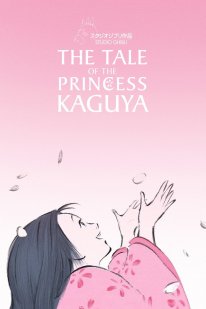
Cartoon The Tale of The Princess Kaguya (2013)
Found inside a shining stalk of bamboo by an old bamboo cutter and his wife, a tiny girl grows rapidly into an exquisite young lady. The mysterious young princess enthrals all who encounter her.
About the cartoon The Tale of The Princess Kaguya
The Tale of the Princess Kaguya (2013) is a poetic animated film by Studio Ghibli, directed by Isao Takahata and based on the ancient Japanese legend The Tale of the Bamboo Cutter. This is not a conventional fairy tale, but a contemplative parable about freedom, destiny, and the price of human desires, told through the language of painting and silence.
Concept and Plot
Inside a stalk of glowing bamboo, an old woodcutter discovers a tiny girl. She grows at an astonishing pace and becomes a beautiful young woman named Kaguya. Her adoptive parents believe she is destined to be a noble princess and move her to the capital, where she is expected to live according to the strict rules of court life.
Yet the higher Kaguya’s status rises, the stronger her longing becomes for the simplicity of childhood, nature, and freedom. The story gradually reveals a tragic conflict between an imposed role and the genuine desire to live one’s own life.
Critical Assessment
Isao Takahata’s film is one of the boldest works in Japanese animation. It deliberately abandons the richly detailed visuals typical of Ghibli, opting instead for a sketch-like, watercolor style reminiscent of living brushstrokes.
This visual fragility intensifies the emotional impact: the world feels beautiful yet fleeting, much like life itself.
The Tale of the Princess Kaguya does not aim to please—it demands attention and inner stillness from the viewer.
Themes and Subtext
-
freedom versus social duty;
-
the beauty of impermanence;
-
loss of connection with nature;
-
the pressure of expectations;
-
the inevitability of farewell.
Visual Style and Atmosphere
The animation resembles living Japanese scrolls: lines are intentionally uneven, movements impulsive, and colors soft and airy.
In the climactic scenes, the style becomes almost expressionistic, conveying the heroine’s inner cry without words.
The musical score is minimalist, reinforcing the meditative state of the narrative.
Cultural Significance
The Tale of the Princess Kaguya is considered one of Studio Ghibli’s most philosophical and mature films. It is often seen as Takahata’s creative testament—a reflection on life, beauty, and the inevitability of loss.
Editorial Conclusion
The Tale of the Princess Kaguya is a film about the right to be oneself, even when the world refuses to accept it.
It reminds us that true beauty lies in freedom and fleeting moments, not in status or recognition. This is a quiet, piercing, and exceptionally powerful animated work that stays with the viewer long after it ends.
Player / Trailer
Leave a comment