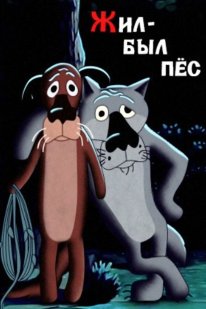
Soviet Cartoons — a school of meaning, form, and animated thinking
Soviet cartoons are a unique phenomenon in world animation, shaping their own artistic language, philosophy, and approach to storytelling. Unlike commercial mass animation, the Soviet school emphasized authorial expression, metaphor, and imagery rather than spectacle. That is why many of these works remain relevant decades later and are perceived as works of art, not merely entertainment for children.
On Minatrix.TV, Soviet animation is presented as a cultural and artistic heritage that influenced the development of auteur animation worldwide.
Key features of the Soviet animation school
The Soviet animation tradition is instantly recognizable thanks to several defining principles:
- Author-driven approach — the director and artist play a central role in shaping a distinct style
(Yuri Norstein, Fyodor Khitruk)
- Philosophical and emotional depth — themes of loneliness, time, memory, responsibility, and choice
- Metaphor and “Aesopian language” — under censorship, animators learned to speak about complex social and existential issues through allegory, fairy-tale imagery, and visual symbols
- Diversity of techniques — Soviet animation was not limited to classic drawing: it actively used
puppet animation, cut-out animation, experimental forms, and even paint-on-glass techniques
- Musicality and rhythm — sound, silence, and pauses become part of the dramaturgy
This combination is what made Soviet animation one of the most original and distinctive schools in the world.
Genres and directions in Soviet cartoons
Soviet animation was far more diverse than people often assume:
- Philosophical and poetic animation
(Hedgehog in the Fog)
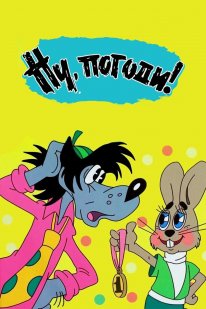
- Humorous and satirical cartoons
(Nu, Pogodi!)
- Fairy tales and literary adaptations — folk and original stories
- Musical and rhythm-driven cartoons
- Allegorical and educational animation designed for layered interpretation
This palette turns Soviet cartoons into not a “single style,” but a complete artistic ecosystem.
International recognition and influence
The global recognition of the Soviet animation school is confirmed by the fact that many leading contemporary creators openly acknowledged its influence. In particular, Hayao Miyazaki has repeatedly named Hedgehog in the Fog by Yuri Norstein as his favorite animated film, highlighting its unmatched depth, atmosphere, and emotional clarity.
This “Aesopian language” and masterful use of metaphor allowed Soviet animators — from Fyodor Khitruk to Aleksandr Petrov — to create works that are now studied in film schools around the world as benchmarks of auteur thinking and technical experimentation: from classic cut-out animation to paint-on-glass artistry.
Why Soviet cartoons are especially interesting for adults
For adult viewers, Soviet animation is valuable not for nostalgia but for the chance to rediscover it. With age, the audience begins to see complex meanings behind apparent simplicity:
the fear of loneliness, the absurdity of systems, the fragility of human connections, and a philosophy of time.
That is why many Soviet cartoons become deeper over the years, not more naive.
Minatrix.TV’s approach to Soviet animation
Minatrix.TV treats Soviet cartoons as a historical, cultural, and artistic phenomenon:
- we analyze the visual language and directorial method;
- we take historical and social context into account;
- we unpack hidden meanings and metaphors;
- we distinguish between child and adult levels of interpretation.
We help you see Soviet animation not simply as the past, but as a living heritage that remains relevant today.
FAQ — Soviet Cartoons
- What are Soviet cartoons?
Soviet cartoons are animated films and series produced in the USSR, known for their author-driven approach, philosophical depth, and wide range of artistic techniques. Unlike mass commercial animation, they were often treated as a form of art and visual poetry.
- Why are Soviet cartoons still considered a benchmark?
Because they were built not on trends but on image, metaphor, and ideas. Many were created as auteur statements, where visual style, rhythm, and meaning mattered more than pure entertainment. That is why they have not aged and continue to be studied in film schools.
- Were Soviet cartoons made only for children?
No. Formally, many were addressed to children, but in practice they often carried two- or three-layer readings. Children could follow the plot, while adults discovered philosophy, social satire, and existential themes hidden inside a fairy-tale form.
- What does “Aesopian language” mean in Soviet animation?
“Aesopian language” is a way of speaking about complex — sometimes forbidden — ideas through allegory and symbols. Under censorship, animators learned to conceal sharp messages inside seemingly simple stories, making Soviet cartoons especially multi-meaningful and compelling to rewatch as an adult.
- What techniques were used in Soviet cartoons?
The Soviet school actively experimented with form. Alongside classic hand-drawn animation, it used:
- puppet animation;
- cut-out animation;
- paint-on-glass;
- graphic and mixed techniques.
This variety became one of the reasons for the unique aesthetic of Soviet animation.
- Are Soviet cartoons recognized outside the USSR?
Yes. Soviet animation gained international recognition and influenced creators worldwide. For example, Hayao Miyazaki has called Yuri Norstein’s Hedgehog in the Fog his favorite animated film, emphasizing its unmatched atmosphere and depth.
- What can you find in the “Soviet Cartoons” section on Minatrix.TV?
Minatrix.TV offers a structured catalog of Soviet cartoons with analytical materials, genre classification, and cultural context. The platform helps viewers see these works not only as childhood memories, but as a complete artistic heritage.
Soviet cartoons on Minatrix.TV
Soviet cartoons are not just animation from the past or a set of nostalgic images. They are a school of thinking, where limited resources were compensated by richness of ideas, and outward simplicity concealed philosophical depth. They taught viewers to read between the lines, feel the pauses, and perceive an image as a thought rather than an illustration.
Today, in an age of visual noise and algorithm-driven content, Soviet animation feels especially sharp — a reminder that animation can be silence, reflection, and dialogue with the viewer. It is a heritage that does not grow old because it speaks not to fashion, but to human experience.
 HDIMDb 8.5KP 8.7