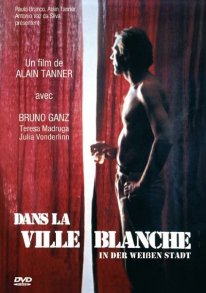
Movie Dans la ville blanche (1983)
"In the White City" (1983) is a meditative drama by Alain Tanner about escaping routine in Lisbon. Immerse yourself in the atmosphere of time standing still.
About the movie Dans la ville blanche
In 1983, the meditative drama “In the White City” (Dans la ville blanche) by Swiss director and screenwriter Alain Tanner was released. This film is a striking example of his unique style and ability to create deep, psychologically subtle works that brought him fame beyond his native country. The film invites the viewer to Lisbon, but not as a tourist guide, but as a starting point for an existential journey into oneself.
Plot (spoiler-free)
At the center of the story is a ship's mate who, tired of the monotony of his work and, perhaps, of life itself, makes an impulsive decision to disembark in Lisbon. While his ship sails away, he remains in the unfamiliar “white city,” immersing himself in a state of voluntary isolation and self-reflection. In this semi-dreamlike, slowed-down world, the protagonist tries to comprehend his existence. He writes letters to his wife, films the city around him with a movie camera, and enters into a relationship with a maid, trying to fill an inner void or, conversely, find himself in this new freedom. The film unfolds slowly, sparse in external events, focusing on the protagonist's inner world and his feeling of time standing still.
Why You Should Watch It
- Alain Tanner's Signature Style. The film showcases the unique style of one of the few Swiss directors to achieve international recognition. This is unhurried, thoughtful cinema that offers the viewer not entertainment, but a deep cinematic experience.
- Unique Atmosphere of Lisbon. “The White City” becomes almost an independent character, immersing the viewer in a meditative state along with the protagonist. This atmosphere is free from hustle and bustle; it envelops and invites contemplation.
- Profound Existential Exploration. The film touches upon eternal themes of freedom of choice, loneliness in a big city, the search for meaning in life, and escape from routine. It encourages the viewer to ponder their own life dilemmas.
- Aesthetics of Minimalism. Tanner's modest and sparse stylistic choices do not distract from the main focus – the character's internal drama and experiences, allowing concentration on the subtle nuances of his state.
- Talented Cast. The film features an ensemble of actors, including renowned performers such as Pedro Hefe, Bruno Ganz, and Teresa Madruga. Their presence guarantees high-quality portrayal of characters and depth of emotions.
Themes
“In the White City” is a reflection on freedom and its consequences, on escaping a predetermined destiny and searching for a new path. The film explores the nature of loneliness in a foreign city, the illusion of time standing still, and how a person attempts to fill an inner void through new connections or creativity (the use of a movie camera). It is also a story about the romanticization of escape, about encountering otherness, and about an attempt to build a new reality that may prove as ephemeral as a dream.
Verdict
“In the White City” is not just a film; it is an experience. It demands patience from the viewer and a willingness to slowly immerse oneself in a contemplative drama. For those who appreciate auteur cinema, deep psychological portraits, and atmospheric films capable of sparking inner dialogue, Alain Tanner's work will provide a unique aesthetic and intellectual pleasure. This is a film for those ready to watch, listen, and feel, remaining alone with the thoughts and images of white Lisbon.
Player / Trailer
Leave a comment